








Low-Ops Discount - Up to 45% off
Low-Ops is a developer platform that streamlines app deployment and management for private cloud environments.
Get discountCategory
App Building Software

What is Low-Ops?
Low-Ops is a cloud cost optimization platform designed to help engineering and finance teams control and reduce cloud spending. It connects to your cloud providers, analyzes usage, and highlights inefficiencies, giving clear, actionable recommendations instead of raw billing data.
Key features include automated cost analysis, forecasting of future spend, and visibility into cost by service, team, or project. It offers optimization suggestions (such as rightsizing resources or eliminating waste), budgeting and alerts to prevent overruns, and reporting tools for stakeholders. Low-Ops focuses on making cloud financial management simple and collaborative, so teams can continuously improve efficiency without complex manual analysis.
- Internal Developer Platform for private deployments
- Self-service app deployment without DevOps expertise
- Automated CI pipelines with security checks
- Governance for users, roles, and access
- Monitoring, logging, and disaster recovery capabilities
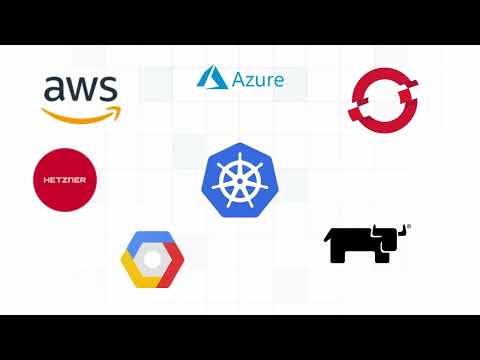
- Kubernetes-compatible across cloud and on-premises
Eligibility
Number of Seats/Users: Low-Ops offers discounts based on the number of users or seats. A higher volume typically leads to a better discount structure, especially for enterprise-level usage.
Commitment to a Long-Term Contract: Discounts are often provided to companies that commit to using the service for a longer period (e.g., 1-year or 3-year contracts). A longer commitment shows Low-Ops that the company is serious and willing to invest in the platform long-term.
No Active Discounts: Companies that are not already receiving other active discounts may have a better chance of qualifying for additional discounts from Low-Ops. Low-Ops reserves discounts for new customers or those not currently under promotional pricing.
Volume or Usage Commitment: Low-Ops offers discounts if you agree to a minimum amount of usage or transaction volume. This could be based on data storage, transactions, or other metrics tied to how much you will use the platform.
Enterprise-Level Negotiation: Companies that qualify as “enterprise” due to their size or complexity (e.g., having large teams, multiple departments, or geographical presence) may be eligible for additional discounts from Low-Ops. Such companies are often in a position to negotiate for better pricing.
Early Renewal or Prepayment: Low-Ops often offers discounts if you renew early or prepay for the entire contract period. This is a common approach to securing a lower price.

Low-Ops - Up to 45% off
Reviews
Here at Spendbase our internal data shows that Low-Ops is especially valued by teams that want strong deployment control without hiring a large platform engineering staff.
From what our Spendbase clients share, the main positives cluster around a few themes:
-
Faster delivery cycles
– Most teams report going from “days or weeks” to “minutes or hours” for new app deployments.
– Self-service workflows for developers are highlighted as a big win, especially for smaller DevOps teams.
– Built‑in pipelines for testing and security checks reduce context-switching between tools. -
Operational simplicity and governance
– Clients like that Low-Ops abstracts Kubernetes complexity while still running on their own clusters.
– Role-based access control and user management are often cited as key for mid-size and enterprise setups.
– Governance features help standardize how apps are deployed across teams and environments. -
Cost and resource efficiency
– Our internal data shows that many clients use Low-Ops to avoid hiring or expanding a dedicated platform engineering team.
– Better resource allocation, autoscaling capabilities, and consolidated monitoring contribute to infrastructure savings.
– Several clients see value in not stitching multiple tools together (CI, CD, monitoring, governance). -
Compliance and data sovereignty
– Organizations with strict data residency requirements appreciate that Low-Ops installs on private clouds and on‑premises.
– Security monitoring and logging are seen as good foundations for audits and compliance checks. -
Reliability and observability
– Health monitoring and consolidated logs are frequently mentioned as making incident response easier.
– Disaster recovery options give extra confidence for mission‑critical workloads.
Areas where Spendbase clients see room for improvement:
- Initial setup can feel a bit heavy for smaller teams without Kubernetes experience, even if day‑to‑day use is simpler.
- Some clients want more out-of-the-box integrations with their existing ticketing, alerting, or secrets management tools.
- A few mention that the breadth of features requires better onboarding guides and in‑product tips.
Overall, our internal data shows that Low-Ops fits best for companies that:
– Run on Kubernetes (or plan to)
– Care about private cloud / on‑prem control
– Want to give developers self-service deployment while keeping governance, security, and costs under control.
See how much you can save on your stack
Pick your team’s tools!
Click to select one or more tools.


What’s your company size?
Just click to select.
What’s your business email?
We'll send you calculations right away
The email is flying to your inbox!
Beyond discounts, you may qualify for up to $100K in AWS credits.

FAQ
1. What is a Low-Ops discount?
A Low-Ops discount is a price reduction we offer when your team needs minimal onboarding, configuration, and ongoing support to run our product successfully.
2. Who is eligible for Low-Ops discounts?
Teams that can self-serve setup, use standard configurations, and require limited support during onboarding and ongoing use typically qualify for our Low-Ops discounts.
3. How much can I save with a Low-Ops discount?
Most customers save between 10 and 25 percent compared with standard pricing, depending on contract length, payment terms, and how low-touch the implementation is.
4. Do Low-Ops discounts require an annual or multi‑year commitment?
Usually yes. We reward predictable, low-support usage with our best pricing when customers commit to at least an annual plan, often with additional savings for multi‑year terms.
5. Can startups or small teams get Low-Ops discounts?
Yes. If your team is comfortable with self-service onboarding and uses our recommended defaults, you can still qualify for Low-Ops pricing, even at smaller scale.
6. Will I still receive support if I’m on a Low-Ops discounted plan?
Absolutely. You still get core support and documentation access. The discount simply reflects that you rely primarily on self-service and standardized workflows.
7. Can we switch to Low-Ops pricing at renewal?
Yes. If your usage has become more standardized and self-service, we can reassess at renewal and move you to a Low-Ops discounted plan.
8. Are Low-Ops discounts compatible with other promotions?
In most cases, Low-Ops discounts replace other promotions. We structure one transparent, best-available price rather than stacking multiple overlapping discounts.
Related discounts

AppSheet
App Building Software
Up to 20% off

Protogrid
App Building Software
Up to 35% off

Autodesk Forge
App Building Software
Up to 20% off

Qlerify
App Building Software
Up to 35% off

Coreo
App Building Software
Up to 35% off

NodeScript
App Building Software
Up to 20% off
Software cost optimization
Low-Ops savings in five steps
Let’s estimate your potential savings and see how you can scale your cloud infrastructure.
One call. No cost. No commitments


meet vendor relationship EXPERTS
Our customers save millions with us



Save on Low-Ops
It’s time to shrink your bill
Let our SaaS cost optimization experts check what deals you can get and how much you can save on your corporate subscriptions
See how you can:
- Learn about pricing benchmarks and discounts
- Present potential savings by vendor to your team
- Meet your SaaS and cloud cost optimization goals
Get Low-Ops discount
We’ll email you back within 1 business day