





Cost optimization
AWS Account Management White Paper: Security, Control, and Cost

One bad permission or one messy bill can turn an AWS project into a board-level problem. For you, AWS account management is not only a billing task. It is the way you organize cloud resources, control access, and stop small errors from becoming expensive incidents.
That matters to CTOs, CFOs, and developers at the same time. A strong model cuts risk, improves visibility, and makes daily operation less chaotic. If your AWS environment keeps growing, your structure has to grow with it.
What an AWS account really does in your cloud setup
An AWS account has two jobs. First, it holds AWS resources. Second, it creates a security boundary. As of May 2026, AWS still points teams toward stronger isolation between production and non-production in its best practices for a multi-account environment.
The account as a resource container
Your compute, storage, logs, and permissions live inside an account. That affects ownership, billing, quotas, and cleanup. When you use separate environments for dev, test, and prod, you stop mixing experiments with live business traffic.
The account as a security boundary
Each account also limits blast radius. If a developer makes a bad change in a sandbox, that mistake does not need to touch production or your audit trail. In plain terms, one locked room is safer than one giant warehouse.
This quick comparison shows where separation pays off.
| Keep together | Split apart | Why |
|---|---|---|
| Dev app and test data | Production workloads | Different risk levels |
| Internal tool and its temp logs | Central log archive | Better audit protection |
| Shared experiments | Security tooling | Different owners and rules |
- You gain cleaner ownership and safer change control.
- You accept a little more setup and cross-account work.
See how much you can save on your stack
Pick your team’s tools!
Click to select one or more tools.


What’s your company size?
Just click to select.
What’s your business email?
We'll send you calculations right away
The email is flying to your inbox!
Beyond discounts, you may qualify for up to $100K in AWS credits.

Why AWS Organizations is the foundation of strong account management
The AWS Organizations service is the control plane for accounts in the organization. It gives you centralized billing, policy control, and a clean way to manage a growing organization. In 2026, the common pattern is simple: keep the organization’s management account locked down and free of workloads, then run apps in each member account.
Keep the management account boring. If workloads run there, your safest place becomes your riskiest place.
At the top sits the management account. Below it sit member accounts, each built for a purpose. That structure gives finance one bill, gives security one place for guardrails, and gives engineers room to move without opening the whole cloud.
| AWS Organizations feature | What it helps you do |
|---|---|
| Management account | Centralize billing and control |
| Member account | Isolate apps, teams, or tools |
| Organizational unit | Group by risk and purpose |
| SCPs | Cap risky actions before they happen |
How organizational units help you group accounts with purpose
Choose OUs by function, not by your company chart. Production, non-production, sandbox, security, and logging are easier to manage than mirroring departments. A finance app and a customer API may sit under the same production OU because they share the same risk profile.
New accounts should join the right OU on day one. That makes management with AWS Organizations much easier because policy follows the workload, not the org chart.
What service control policies add to your guardrails
SCPs do not grant permission. They set the outer wall for what users and roles can perform. That is why they are such a strong guardrail. Test each policy in one OU before you roll it across the full organization.

| SCP example | What it limits | Best place to start |
|---|---|---|
| Deny leaving the organization | Stops account escape | All OUs |
| Limit approved regions | Reduces sprawl | Production |
| Restrict costly instance launches | Protects budgets | Sandbox |
- You gain central management and better guardrails.
- You trade some freedom for stronger policy control.
How you set up access without giving away the keys
Your access model is where security becomes daily habit. The root user should stay reserved for rare recovery tasks. Daily work should move through IAM Identity Center, IAM, and roles with short-lived credential use. That is the 2026 pattern because it cuts exposure and leaves a better audit trail.
Root user protection that should never be optional
Protect every root user with MFA, tight email control, and a current phone number. Review that recovery process monthly or quarterly. If too many people can reset the inbox, your strongest account boundary is already weak.
Avoid daily admin from root. Do not leave root credentials in a shared vault with broad access. Keep a written break-glass task list, and keep it short.
Using IAM Identity Center and delegated admins for daily work
IAM Identity Center can provide one sign-in path for people who need the console or API across multiple accounts. Developers can assume the right role for the right task instead of carrying long-lived keys. A delegated admin account, or delegated administrator where a service supports it, lets teams manage supported tools without touching the organization’s management account every time.
A real-world example looks like this: your platform team manages shared networking from one account, your security team runs findings from another, and your product team deploys in app accounts. Each group gets the permission it needs, and no one gets the full kingdom.
- You gain cleaner audits and less key sprawl.
- You spend more time upfront on identity design.
The account structure that keeps logs, security, and workloads separate
A clean multi-account setup usually has management, security, log archive, infrastructure, production, non-production, and sandbox accounts. That layout protects your log data, separates duties, and makes incident response faster. AWS also outlines a practical multi-account strategy for small and medium businesses.
A real-world SaaS case shows why this matters. A B2B software company moved from one shared account to seven. After the change, customer apps lived in production accounts, security tools moved to a security account, and CloudTrail logs landed in a log archive account. When a developer broke a non-production deployment, customer traffic kept running and audit logs stayed intact.

This baseline is a useful starting point.
| Account type | Main job |
|---|---|
| Management | Billing and org control only |
| Security | Central security tool and findings |
| Log archive | Keep audit and config logs |
| Infrastructure | Shared network and base services |
| Workload accounts | Run prod, non-prod, sandbox apps |
How AWS Control Tower can speed up a safe baseline
Control Tower can create new accounts with a standard baseline, set guardrails, and reduce manual mistakes. If you are building fast, that saves time and keeps your organization service rules consistent. AWS explains the pattern in its Control Tower landing zone guidance.
When AWS Resource Access Manager makes sharing safer
AWS Resource Access Manager lets you share selected resource types across accounts without collapsing boundaries. Your network team can share subnets or a transit gateway, while app teams still keep workload risk separate. That is much safer than pushing everything into one big bucket.
- You gain better separation for logs and workloads.
- You add some design work for shared services.
Free virtual cards for non-EU residents
Open in 1 working day, issue 100 virtual cards, and get up to 1.25% cashback.
Get a free account
How to keep costs visible and account sprawl under control
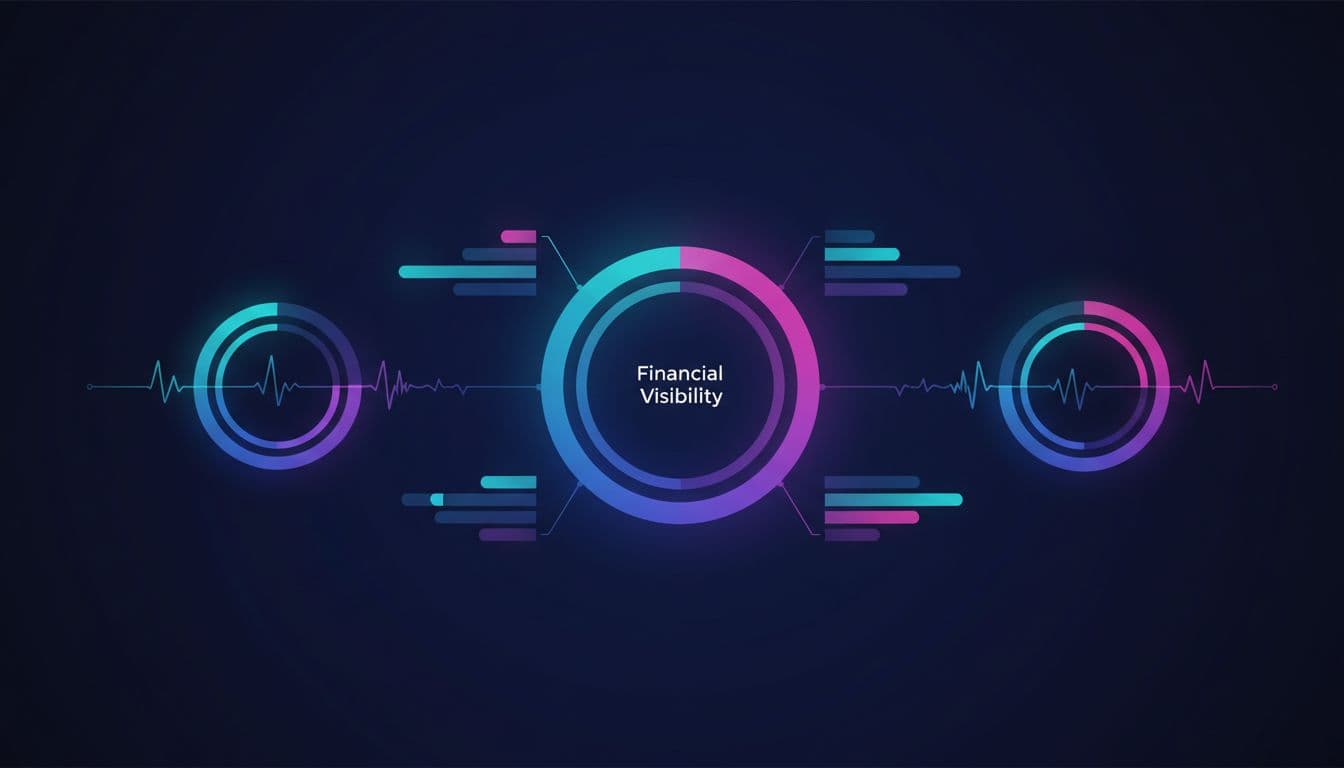
Costs get blurry when ownership gets blurry. Separate accounts help finance map spend by team, product, or environment. In 2026, strong account management pairs structure with budgets, tags, and recurring review. That way, inactive sandboxes and duplicate proof-of-concept stacks do not pile up.
What to track so finance and engineering stay aligned
Watch cost by account, major service usage, untagged resources, and sharp jumps in storage, data transfer, or GPU use. Your CFO wants variance by owner. Your engineers want to know which service moved and why.
| Control | Why it works |
|---|---|
| Account structure | Gives clear cost ownership |
| Tags | Breaks down shared spend |
| Budgets | Alerts before overruns grow |
| Regular reviews | Closes stale accounts |
How to use credits and discounts to reduce AWS spend
Savings do not come only from cleanup. Procurement matters too. If your structure is already sound, you can add up to $100k in AWS credits or review an AWS discount program with up to $100,000 in credits. Spendbase says eligible startups may get up to $100,000 in credits, CloudFront discounts of 50 to 90 percent, and compute or storage discounts up to 72 percent. Used well, that gives your business lower spend without weakening governance.
- You gain cleaner showback and fewer billing surprises.
- You commit to regular review and ownership checks.

We can unlock discounts on 10,000+ tools you already use.
Conclusion
A strong AWS Account model makes your cloud safer, clearer, and easier to scale. When you separate accounts by purpose, protect the management layer, use AWS Organizations and SCPs, and give teams the access they need, daily work gets simpler and risk drops.
Review your current structure with fresh eyes. Tighten the weak spots, move logs out of workload accounts, and keep your organization’s management account as quiet as possible.


Get discounts on your team’s favorite apps
Find deals for 10%, 30%, or even 70% off in our discount marketplace.
Check Discounts