



Microsoft Azure Consumption Commitment Without the Guesswork

A Microsoft Azure Consumption Commitment, or MACC, is a promise to spend a set amount on eligible Azure services over a fixed term, usually one to three years. That sounds simple. The hard part is picking a number you can actually use.
This matters because lower unit costs can help your margins, your roadmap, and your board planning. Yet if you commit too high, you can lock yourself into waste.
Microsoft said Azure annual revenue reached $75 billion in FY2025, and Azure growth stayed around 39% to 40% into FY2026, so more teams now face this choice as cloud and AI budgets rise.
If you’re a founder, CTO, CFO, or developer, you need the plain-English version before you sign anything.
How Microsoft Azure Consumption Commitment works in real life
A MACC is a custom deal, not a public flat-rate menu. Your organization and Microsoft agree that you’ll spend a specific amount on eligible Azure over a defined period, often 12, 24, or 36 months.
In return, you may get better pricing, broader buying power, or both. Many deals land in the 5% to 15% range or more, but the exact discount depends on deal size, term length, and your broader Microsoft agreement.
Say you sign a $3 million, 3-year microsoft azure consumption commitment. You need to burn down about $83,333 per month on average. Some months will run hot, others cool, but that pace becomes your guardrail.
What counts toward your commitment, and what usually does not
Most core Azure services usually count toward your macc, including compute, storage, networking, databases, analytics, and many AI services.
Some eligible Microsoft products count too. So do many Azure Marketplace and Microsoft Marketplace purchases that are marked as Azure benefit eligible.
Microsoft’s Azure consumption commitment benefit guide says eligible microsoft marketplace purchases can count at 100% of pre-tax cost at invoice time. That can help you contribute toward your commitment faster.
Still, not every license or add-on is eligible for macc. The macc benefit only applies to licenses used in Azure. If a license is deployed in a hybrid environment or on-premises, a purchased license is not eligible in many cases. Verify deal terms, marketplace badges, and invoice treatment before you assume a purchase will contribute toward your organization’s commitment.
How Azure consumption is calculated and where you can track it
Azure charges you based on measured usage. Then eligible charges reduce your remaining commitment. Normal azure usage burns the balance down over time, while some reservations or other prepayment-style purchases can reduce it faster.
You can track your Microsoft Azure consumption commitment in Microsoft Learn and within Azure portal. For direct Microsoft Customer Agreement customers, look under Benefits. For direct Enterprise Agreement customers, look under Credits + Commitments. You’ll usually see status labels such as Active, Complete, Expired, and Canceled.
If you want deeper monitoring of Azure, use Cost Management exports, APIs, and internal dashboards. That matters because macc is a contractual agreement, not a vague target.
See how much you can save on your stack
Pick your team’s tools!
Click to select one or more tools.


What’s your company size?
Just click to select.
What’s your business email?
We'll send you calculations right away
The email is flying to your inbox!
Beyond discounts, you may qualify for up to $100K in AWS credits.

The upside of MACC, and the trade-offs you need to face early
The appeal is obvious. A good azure consumption commitment can reduce costs, simplify procurement, and pull many teams onto one billing motion. It can also make future Azure planning less foggy.
The risk is just as real. If your spend slips, the commitment doesn’t magically reset.
This quick table shows the balance:
| Potential gain | Practical risk |
|---|---|
| Lower rates on committed spend | Shortfall if usage misses plan |
| Easier buying across teams | Overage billed at normal rates |
| One agreement for Azure and some marketplace buys | Mid-term changes are limited |
| Better budgeting and forecast discipline | More time spent on tracking |
Benefits of MACC for growing teams and enterprise buyers
For founders and CFOs, macc can improve predictability. You predefine a spend path, model the cash impact, and often negotiate better terms on the amount on Azure services you already expect to use.
For CTOs and developers, the benefits of macc are more tactical. You keep room to use Microsoft Azure services across many teams, and you can buy some eligible marketplace solutions without a separate cycle. That helps when you’re moving data platforms, rolling out AI, or consolidating cloud tools under one macc agreement.
Disadvantages of MACC, from shortfalls to planning errors
If you don’t meet your macc target, you may still owe the committed amount or lose value under the contract terms. That is why overcommitting feels cheap on paper and expensive on the invoice.
Project timing causes most misses. A migration can pause. A product launch can slip. Cost optimization can work too well. Or AI demand can spike in the wrong quarter and create spend above your commitment without helping the rest of the term.
MACC is a buying promise. It doesn’t rescue weak forecasting.
Pricing, forecasting, and what happens when your plan changes
Pricing is negotiated, not posted. Microsoft may offer different terms based on your expected usage, existing relationship, term length, support mix, and broader Azure investments.
The cleanest way to plan a microsoft azure consumption commitment is with a rolling 12-month view. Start with your current run rate, then layer in migrations, product launches, reservation plans, and eligible purchases from Microsoft Marketplace MACC FAQs.
How enterprises forecast Azure commitment usage with less guesswork
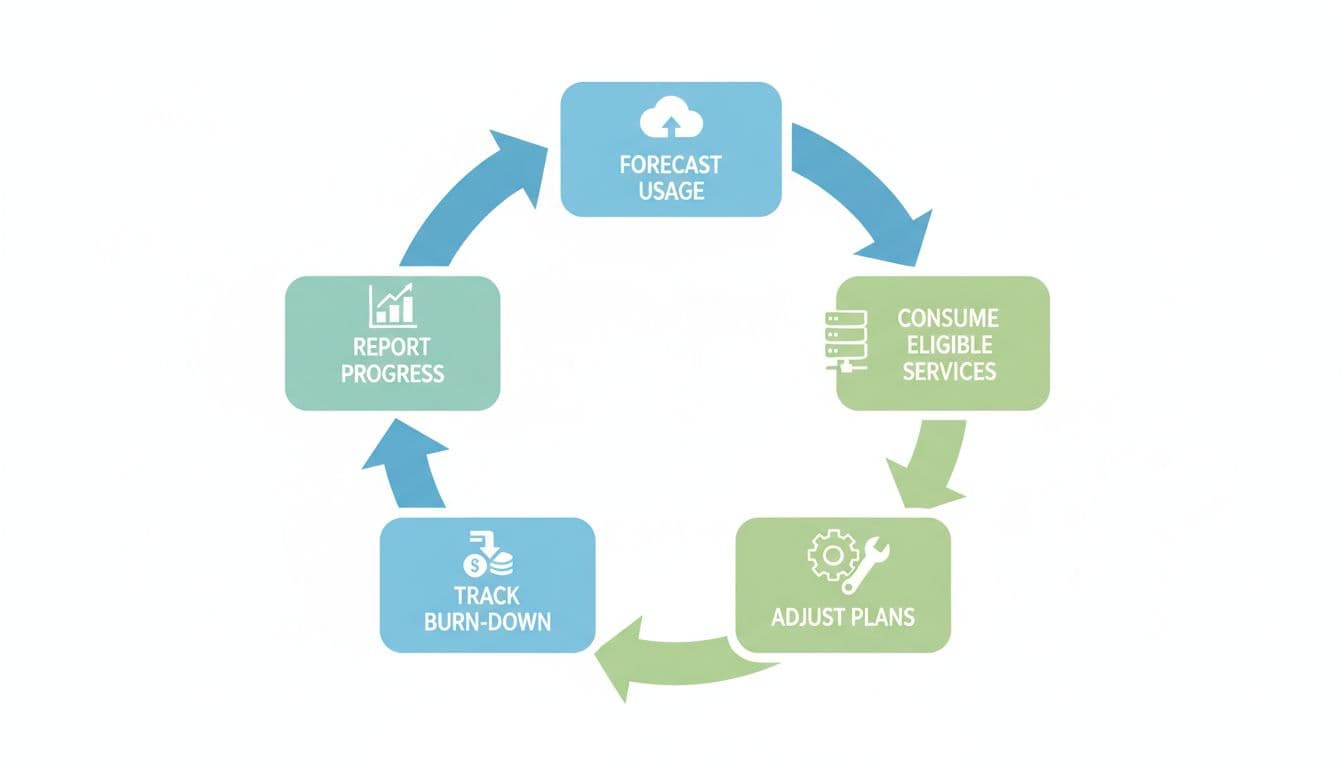
Start with what you already spend monthly while using Azure. Next, add planned migrations, new AI workloads, known reservations, and eligible marketplace offers. Then compare that total with the monthly pace required to meet your macc target.
An illustrative case makes this concrete.
Say your company signs a $1.2 million, 2-year macc and needs $50,000 per month. After Q1, you average only $40,000. You’re 20% behind pace. Your options are not magical, you either pull forward a migration, move a delayed data platform, or shift approved spend to eligible azure benefit-eligible solutions.
A simple forecast sheet helps:
| Input | Monthly impact |
|---|---|
| Current run rate | $32,000 |
| Planned migration | $9,000 |
| New AI workload | $6,000 |
| Eligible marketplace buys | $4,000 |
That model points to $51,000 monthly, which is enough, but only if the roadmap stays real.
Can Azure commitments be adjusted during the term, and what if you miss the target
In most cases, macc is a contractual commitment, so you should not expect a self-serve resize mid-term. The usual response is mitigation, not amendment.
You can move more workloads to Azure, buy eligible reservations, use qualified marketplace purchases, or re-align budgets. Overspend above the commitment is typically billed at normal rates. Underspend can mean paying for value you did not fully use.
How to track MACC usage, manage FinOps risk, and avoid common mistakes
A microsoft azure consumption commitment changes cloud management from passive reporting to active steering. Finance, engineering, procurement, and product all affect whether you meet your macc without waste.
That means you need shared ownership. One team can’t forecast in isolation while another team changes architecture, delays migration, or shifts workloads back to on-premises.
The impact on FinOps, budgeting, and day-to-day cloud decisions
Strong FinOps turns macc into a monthly operating rhythm. You should track remaining commitment, burn rate, reservation coverage, and approved purchases within the macc framework.
Architecture choices matter more than most teams expect. If you keep a data estate on-premises for six extra months, your macc pace can fall fast. If you move an AI service early, you can close the gap just as fast. Microsoft Learn and Azure Marketplace Compass can help you learn how to find eligible solutions before you buy.
Common MACC challenges and mitigation strategies that actually work
Most macc problems are boring, which is why they hurt. Weak ownership, slow reviews, poor eligibility checks, and year-end catch-up plans create avoidable gaps.
Use a simple operating table like this:
| Challenge | Mitigation |
|---|---|
| No clear owner | Assign one macc owner with finance and engineering support |
| Unknown eligible spend | Review eligible purchases monthly before approval |
| Burn rate behind plan | Set alerts when pace falls below target by 5% to 10% |
| Bad marketplace assumptions | Validate azure benefit eligible status before purchase |
You should also rank migrations by business value and macc impact. That keeps cost management tied to delivery, not wishful thinking.

We can unlock discounts on 10,000+ tools you already use.
When startup credits, discounts, and Marketplace buys can help you hit commitment goals
Startup programs can lower your near-term cloud bill, but they shouldn’t blur your long-term macc math. Temporary credits are not the same as durable production demand.
If you’re early-stage, separate free credits from future azure spend before you sign any azure consumption commitment. This is where support can help.
For example, Free Azure credits and startup discounts up to $150K can reduce near-term cost pressure while you model a realistic macc target. That is useful if you’re pre-seed through Series A and still shaping your product, traffic curve, and AI usage.
Marketplace buys can also help, but only if they are eligible to contribute and match your roadmap. Check the badge, the purchase path, and the agreement terms before you count them toward your macc.
A good macc target comes from evidence, not hope. Verify eligible Azure services, model your monthly pace, assign one owner, and track burn-down in the Azure portal before the contract starts.
If your cloud roadmap is real, macc can save money and simplify buying. If your forecast is weak, the same commitment can become an expensive promise you didn’t need.


Get discounts on your team’s favorite apps
Find deals for 10%, 30%, or even 70% off in our discount marketplace.
Check Discounts