





How Much Does Slack Cost in 2026?
Slack pricing tiers support unlimited users, but functionality changes by tier, with higher tiers unlocking more automation, data governance, customization, and AI-powered capabilities. See the pricing breakdown and core features for each plan:
- Free ($0 USD, no seat limitations)
The major limitations include message and file history being deleted after 90 days, support for only 1:1 huddles and calls, a maximum of 10 integrations, and minimal admin & export capabilities.
- Slack Pro
Annual cost: $105 per user if billed monthly, $87 per user when billed yearly. That’s the price for unlimited message & file history, group calls, extra collaboration tools, etc.
- Business+
Annual cost: $216 per user with monthly billing, $180 per user (annual billing). Enhanced security (SSO, access logs), data export, admin analytics API, and more.
- Enterprise+
Annual cost: 240$-420$+ per user (as a rule-of-thumb estimate). The cost may vary widely depending on your contract terms, feature requirements, user volume, etc. In return, you’ll get next-level support, compliance, customization, and customization capabilities.
Slack Cost vs Business Fit: Key Observations
If you’re wondering which Slack tier to choose, note that there are a few aspects to consider.
First, a common misconception is this: higher tiers are meant for larger teams. Unlike some other seat-based pricing modules, it’s not the case for Slack pricing.
For example:
A team of 20-50 people with high regulatory demands might need Business+. In contrast, a larger organization (with 500+ people) without complex compliance or multi-department workflows might still be fine with Pro.
Therefore, focus on defining your functionality requirements so you’re not misguided by team size. Such as:
- AI capabilities. If you’re highly driven towards automation and AI adoption, the Pro or Business+ plan can be a great fit for you.
- Support for multiple workspaces within Slack. That’s an Enterprise+ plan benefit that might be particularly beneficial for organizations with client-facing teams that need separate environments for each while maintaining shared governance and search.
- Time-limited data history. If not an issue, go for a free plan.
- If data residency location isn’t important to you and you don’t require data export capabilities, the Pro plan could be just as beneficial as Business+.
Free or Pro Plan?
If you plan to use Slack as a daily operational workspace with at least 10-15 team members, the Slack Pro plan could be a better fit for you.
Meantime, for a smaller scale, you might keep your spending low with the free plan for some period of time. Here’s a twist: if you remain on the Free plan and accumulate more than 90 days of history, older messages won’t be searchable or visible. However, once you upgrade, Slack indicates that you’ll regain access to those older messages – as long as they’re not more than one year old, since anything older than that is permanently deleted under Free plan retention policies.
Long story short:
Start with Free, then upgrade when you need access to the full message history. This way, you can get anywhere from a 3- to 12-month free Slack runway and save at least $260 for every 10 users and up to $1,040.
Next, if you’re in two minds between the Pro and Business+ plans, ask yourself:
- Are strict security requirements a must for you?
- Do you need advanced admin controls?
- Will you benefit from enterprise-level governance?
If the answer to all of them is yes, choose the higher tiers. Besides, Business+ boasts better customer support, more platform customization capabilities, greater connectivity through admin analytics API and other integration options, and a spectrum of AI-powered features for improved collaboration and task management.
For more details, see a tier-by-tier breakdown below.
See how much you can save on your stack
Pick your team’s tools!
Click to select one or more tools.


What’s your company size?
Just click to select.
What’s your business email?
We'll send you calculations right away
The email is flying to your inbox!
Beyond discounts, you may qualify for up to $100K in AWS credits.

How To Reduce Slack Bill
With Spendbase, you can secure up to 50% off your Slack plan. We handle the end-to-end negotiation to get you the best deal.
| Annual Slack Pricing Per 100 Seats | ||||||
| Pro | Business+ | Enterprise+ | ||||
| Billing cycle | Monthly | Annual | Monthly | Annual | ||
|
Without Spendbase |
10,500$ |
8,700$ |
21,600$ |
18,000$ |
Starting from 24,000$ |
|
|
With Spendbase |
Up to 5,250$ OFF |
Up to 4,350$ OFF |
Up to 10,800$ OFF |
Up to 9,000$ OFF |
4-12,000$+ OFF |
|
Hidden Slack Costs and Considerations
Apart from Slack’s straightforward pricing model, there are still several cost-related considerations to keep in mind. Below are the major ones reported by real Slack users.
> Per-seat costs add up
Due to Slack’s per-seat pricing, costs can become steep as your team expands, especially for community-oriented businesses or large external groups.
> Workspace-wide upgrades only
As users mention, you can’t keep part of your team on a free plan while upgrading only selected members to Pro. Meaning, when you upgrade, you upgrade the entire workspace, and every member moves to the new plan.
> Downgrades only at renewal
You can only downgrade at the end of your current billing cycle, and Slack does not offer partial refunds for unused time mid-cycle. It can be quite substantial, especially for annual plans and bigger teams.
> Occasional users still count as active
Any member who uses Slack within a 28-day window is considered active for billing, meaning even occasional or one-time users will incur charges.
> Non-refundable credits and prepaid fees
Unused credits (from inactive users) and prepaid fees are non-refundable if you leave Slack.
> Auto-renewal after free Pro trial
Some users report that the Pro plan auto-renewal is enabled by default unless it is cancelled manually.
> Risk of data loss when downgrading.
When downgrading to the free plan, some users mention being warned that their message history will be deleted without an option to export it.
> Unclear conditions for Slack credits or refunds.
While Slack states they’ll credit your workspace with Slack credits equal to the unused portion of your paid plan, the exact conditions are not fully disclosed, and some users find it difficult to actually claim them.
Feature-by-Plan: What You Get
If you’re still deciding which Slack plan to choose, we’ve got you covered. Browse the key highlights of each option to understand how to get the maximum value for your business needs.
Slack Free Plan
The Free plan works for simple, lightweight communication, but it quickly becomes restrictive for any team relying on searchable history, integrations, or structured collaboration. It’s a solid starting point, but not a long-term solution for growing businesses.
Key free plan capabilities include:
- Message history is limited to up to 90 days
- Up to 1-year data retention policy
- Basic features: channels, search, 1:1 huddle & Slack Connect,
- Up to 10 app integrations on Free in some sources
Limitations:
- No full message or file history after 90 days
- No screen-sharing or group calls (only 1:1 huddles)
- No SSO or advanced security controls
- Limited automation (no Workflow Builder)
- No AI-powered features are available in higher-tier plans
- No admin analytics or centralized user management
- Not possible to deploy apps to Slack infrastructure
Slack Pro Plan
Pro is a well-functional plan for businesses that use Slack as a daily workspace. Its unlimited history, expanded integrations, and stronger collaboration features make it a solid fit for most small to mid-sized teams that need reliability and don’t require enterprise-level governance.
Major benefits of the Pro plan include:
- Unlimited message history
- Unlimited integrations
- Group audio/video calls
- Customizable sections of the Channels tab
- Custom workflows
- Custom user groups (based on projects, departments, roles, etc.)
- Admin analytics dashboards
- Access logs
- AI-powered features: thread & channel summaries, huddle notes, AI assistant apps
- 24/7 support
Limitations:
- No SAML SSO or SCIM provisioning
- No access to no-code conditional branching in Workflow Builder
- No enterprise-level data export (only basic export)
- Limited audit and compliance controls
- No data-residency options
- Limited governance over external collaboration (guests, shared channels)
- Standard (not priority) support only
Slack Business+ Plan
Business+ is a good fit for organizations that look for advanced control, compliance, security, and other granular admin features. This tier ensures your Slack is scalable, well-governed, and highly secure.
Game-changing features of the Business+ Plan are:
- Enterprise search across all connected applications
- SAML-based SSO
- Data exports for all messages
- The choice of storage location of data at rest
- Manage posting permissions in any channel (Pro planned allowed #general channel only)
- Access to a range of AI-powered features (AI search, daily recaps, file summaries, AI language translations, AI workflow generation, etc.)
Limitations:
- Still single-workspace (no multi-org workspace management)
- No enterprise search
- No Slack Enterprise Key Management
- Lacks advanced data-residency and compliance modules
- Limited external guest management / DLP integration
Slack Enterprise+ Plan
Enterprise+ is built for large and typically highly regulated companies. If you require full advanced compliance and the highest level of security, it might be a solid option for your business. Besides, its multi-workspace management and dedicated customer service can be ideal for enterprise-level support.
Key enterprise-level capabilities of Slack include:
- Enterprise Grid (multi-workspace architecture)
- AI-powered Enterprise search
- Enterprise Key Management
- Advanced data residency options
- Organization-wide security and compliance policies
- Enhanced audit and compliance tools
- Custom legal holds
- Advanced eDiscovery exports
- Highest-tier uptime SLAs
- Dedicated enterprise support
- Advanced SCIM provisioning and identity management
- Domain whitelisting with highly granular access controls
Key considerations:
- Custom quote that may vary widely by seat count and features
- Contract-bound, hard to downgrade once onboarded
- Requires multi-year agreements (in many cases)
- Complex setup and higher admin overhead
- Some advanced modules (Enterprise Key Management, Slack AI extensions, GovCloud) can be billed separately.
Free virtual cards for non-EU residents
Open in 1 working day, issue 100 virtual cards, and get up to 1.25% cashback.
Get a free account
Money-saving tips to cut your Slack bill
Grab a few simple but smart best practices to secure the lowest possible cost for your Slack, multiply proven by our clients.
The Basics
- Opt annually (if possible) to cut your Slack expenses by a minimum of 15%
- Regularly review inactive users to eliminate shadow IT–related extra costs
- Check qualifications for special pricing/discounts (education, non-profit)
- Time your renewal around quarter ends, since vendors sometimes give better deals
Pro-Level Cost Optimization
- Negotiate better custom discounts during upgrades or through multi-year contract commitments
- Leverage both your current and projected user volume to secure a greater discount
- Partner up with seasoned vendor negotiation experts like Spendbase
Speaking of vendor management and Slack cost reduction, Spendbase takes over the entire Slack cost optimization process for you.
We negotiate directly with Slack on your behalf to secure deeper discounts, more flexible contract terms, and uncover cost-saving opportunities you may not even know exist.
Drawing the line: is Slack worth the price?
Ultimately, the answer can be different for different businesses. So the real question isn’t “Is Slack worth it?” but “Is faster decisions, less miscommunication, and a shared brain for your team worth $X/month?” For most growing teams using it properly, the answer is usually yes. For everyone else, Free is a perfectly good parking lot until you outgrow it.
Ultimately, Slack might not directly impact your revenue gains. But its indirect effect on it might be substantial. Here’s why.
Slack’s core value for money lies in providing smoother workflows for teams. This, in turn, often results in:
- Less operational friction;
- Faster decision-making;
- Productivity gains across the team.
These are just a few examples of it. To dive deeper, see some real-life results and impact areas below.
Use Cases & Real-Life Results
Among the most common Slack use cases with great ROI are service teams. As Slack helps them resolve customer issues faster in real-time channels instead of slow email loops, this significantly reduces escalations, shortens response times, and improves customer satisfaction overall.
In particular, some real-life Slack adoption ROI results show:
- Nearly 3x in ROI, totalling to around $1M in added revenue from improved customer satisfaction;
- 15% cost per ticket reduction thanks to faster processing;
- 30% faster response time by integrating Salesforce directly into Slack.
See the table below with an assessment of the key benefit areas and how they might impact ROI.
| Benefit Area | How It Impacts ROI | Features |
| Communication speed | Faster response times, reduced operational cost | > Channels
> Huddles > Message threads |
| Collaboration & transparency | Centralized info for fewer blockers and faster decisions | > Shared Channels
> Mentions > File sharing |
| Knowledge Accessibility | Ops efficiency, faster ramp for new hires | > Search
> Pinned items > Message history |
| Workflow integrations & automation | Increased efficiency and productive time | > Integrations
> Workflows > Bots |
| Remote & hybrid team efficiency | Reduced the cost of misalignment and excess meetings | > Huddles
> Async messaging > Statuses |
| Customer/incident response | Increased customer satisfaction and retention | > Incident channels
> Alerts > Escalation workflows |
Businesses That Can Benefit Most From Slack
Based on our benchmarking and insights from real Slack customers, Slack can prove the most beneficial in these use cases:
✔️ Remote or hybrid teams;
✔️ Service/support teams needing fast response;
✔️ Engineering/product teams coordinating releases and incidents;
✔️ Fast-growing or cross-functional organizations;
✔️ Companies that rely on many tools that benefit from integrations.
Also, here’s who might benefit least:
⚠️ Very small or co-located teams;
⚠️ Businesses with fairly simple communication needs;
⚠️ Environments with strictly formal e-mail communication (legal firms, government institutions, financial compliance teams, etc.).
Slack Alternatives: Monthly Pricing Breakdown
Slack’s impact and ROI aside, how does it actually compare price-wise with similar communication and productivity tools? Find out below.
| Tier 1 | Tier 2 | Tier 3 | Tier 4 | |
| Slack | $0 | $7.25 (annual)
$8.75 (monthly) |
$15
(annual) $18 (monthly) |
Custom |
| Microsoft Teams | $4 (annual) | $6 (annual) | $12.50 (annual) | $22 (annual) |
| Google Workspace | $7 (annual) / $8.40 (monthly) | $14 (annual) / $16.80 (monthly) | $22 (annual) / $26.40 (monthly) | Custom |
| Discord | $0 | $2.99 | $9.99 | Custom |
| Notion | $0 | $10 | $15 | Custom |
| Trello | $0 | $5 | $10 | $17.50 |
| Asana | $0 | $11 | $25 | Custom |
| Monday.com | $9 | $12 | $19 | Custom |
Slack vs Microsoft Teams
Microsoft Teams is about 45% cheaper than Slack, which can be a strong value if you already use Microsoft 365. However, the interface can feel heavier and less intuitive compared to Slack’s simpler, faster experience.
Slack vs Google Workspace Chat/Spaces
Google Workspace begins at nearly the same price as Slack, however, with a different set of features since it includes email, Drive, Docs, and productivity tools.
While it might seem like a better value for money thanks to its all-in-one functionality, Google Workspace is often viewed as supplementary rather than replaceable. Slack generally wins on communication fluidity and usability for fast-moving teams.
Slack vs Discord
Discord paid plans start roughly 60% cheaper than Slack and are very easy to use for casual or startup communication. However, it lacks enterprise security, workflow automations, and structured channels, giving it limited value for mature organizations.
Slack vs Notion
Notion starts at a price that is 38% more expensive than Slack. While exceptional for documentation and knowledge management, it’s not built for rapid real-time communication. Therefore, it’s best used alongside, not instead of Slack.
Slack vs Trello
Trello begins at a price that is around 30% cheaper than Slack. It can be a good fit for visual task management and lightweight collaboration, but offers little real-time chat functionality. Thus, similarly to Notion, it has high value when used alongside Slack, not instead of it.
Slack vs Asana
Asana’s starting price is more than 50% more expensive compared to Slack. It’s a powerful solution for advanced project and workflow management, but not quite suitable for fast communication offered by Slack.
Slack vs Monday.com
Monday.com is about 24% more expensive at the starter price. It has strong workflow automation and project boards, but more complex to learn than Slack and not built for rapid messaging. Thus, its higher cost can be justified when workflow and tracking outweigh communication needs.
Final Thoughts
Ultimately, whichever tool you’re aiming for, Spendbase can help you save substantially.
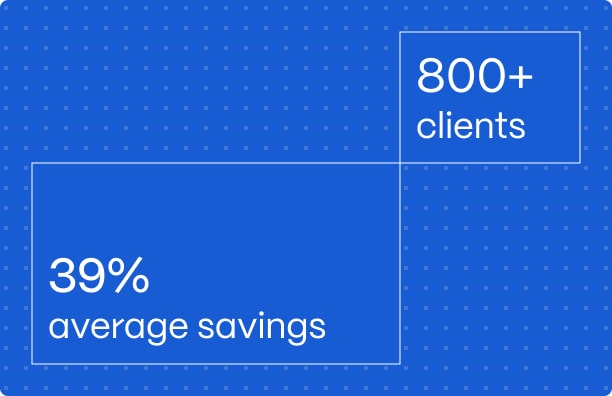
On average, we cut 39% of IT spend for our clients. Therefore, with us, you can be confident you’re never overpaying and always getting maximum value for your SaaS spend.

We can unlock discounts on 10,000+ tools you already use.
FAQ
Does Slack offer discounts for startups?
Slack does not offer a universal startup discount, but case-by-case concessions may apply during negotiation. Depending on the case, startups can enjoy a 25% discount on Pro or Business+ plans for one year, potentially saving up to $9,000. Reach out to Spendbase to get info about that deal
Is there a discount for Atlassian customers?
Indeed. Atlassian customers on paid plans are eligible for 50% off new Slack Standard or Plus plans for 12 months. Find out more about the deal with Spendbase.
Does Slack charge tax on subscriptions?
Depending on your location, Slack may apply sales tax, VAT, GST, or other consumption taxes. These appear automatically at checkout based on your billing address.
Can I pay for Slack only for some users and keep others on the free plan?
No. Slack requires you to upgrade the entire workspace. You cannot mix free and paid users within the same workspace.
Are guest users billable?
Yes. Multi-channel guests count as paid members. Single-channel guests do not. Misconfigurations here often lead to avoidable overcharges.
How can I avoid paying for inactive or occasional users?
Regular audits are essential. Remove inactive seats, convert multi-channel guests to single-channel where possible, and enforce access policies to avoid “drive-by” activations.
How much can companies typically save by negotiating Slack?
Savings vary, but most companies see 15–30%, and some achieve up to 50% with expert-led vendor negotiation and seat optimization.


Get discounts on your team’s favorite apps
Find deals for 10%, 30%, or even 70% off in our discount marketplace.
Check Discounts