





API Security With Cloudflare: Finding Shadow APIs in 2026

By 2026, your company likely runs more APIs than anyone can name from memory. Mobile apps, partner integrations, AI agents, internal tools, and old test projects all create new paths into production. Some of those paths are visible. Shadow APIs are not.
That blind spot has a business cost. Hidden API endpoints can lead to data exposure, audit trouble, downtime, and wasteful cloud spend. Recent 2026 reporting shows more than 80% of organizations have faced API security issues, yet only 10% say they have a complete plan.
Cloudflare is one path to tighter web application and API security, but buyers often mix up API Gateway and API Shield. You need the difference before you buy.
What Cloudflare API Gateway is, and where it fits
When you search for “API Security Cloudflare,” you may be looking for several jobs at once: routing, discovery, validation, access control, and threat protection. Cloudflare’s current API security story is centered on API Shield, while the Cloudflare API Gateway docs describe routing, analytics, logging, and security functions that sit at the edge.
That edge position matters. Cloudflare sees API traffic before it hits your origin, so you can inspect api requests, validate them, rate-limit abuse, and block suspicious calls early. For a CTO, that means cleaner control. For a CFO, it means fewer surprise costs from resource abuse. For a founder, it means less risk hiding in old code.
How Cloudflare helps you find shadow APIs before an attacker does
API discovery works by watching real traffic and building an inventory of active endpoints. That lets you spot undocumented paths that still answer requests in production. Shadow APIs are active but unmanaged; zombie APIs are old endpoints that should be dead but still exist.
If you can’t list your active endpoints, you don’t have API security. You have hope.
A common real-world example is a mobile team that retired a v1 customer profile call in docs, but the old app still uses it. Cloudflare can surface that endpoint from observed traffic, so you can validate it, restrict it, or shut it down before an attacker finds it.
API Shield vs API Gateway, the practical difference
Many teams searching for Cloudflare API Gateway are really evaluating Cloudflare API Shield. In practice, that means discovery, schema validation, JWT checks, mutual TLS, authentication posture, rate limiting, and threat controls.
Cloudflare’s own API Shield docs are the better place to judge whether the platform matches your api security and management needs. Discovery is the first step, because you can’t protect apis you can’t see.
See how much you can save on your stack
Pick your team’s tools!
Click to select one or more tools.


What’s your company size?
Just click to select.
What’s your business email?
We'll send you calculations right away
The email is flying to your inbox!
Beyond discounts, you may qualify for up to $100K in AWS credits.

Why API security is different from web security in 2026
A web application firewall still matters, but a WAF alone won’t cover modern api attacks. APIs are built for machine-to-machine access, so traffic often looks valid at the HTTP layer even when the business action is malicious.
That changes the security model. You need endpoint-level visibility, authentication and authorization checks, schema validation, and rate limiting that match how api users and third-party api clients behave.
APIs expose business logic, not just pages
Your APIs handle account records, payments, order history, and admin actions. An attacker doesn’t need a flashy exploit page. They want api data and business logic.
If one account endpoint accepts /users/1245 after a token for /users/1244, you have unauthorized data access. That is why object-level checks matter more than pretty dashboards.
Traditional web defenses miss API-specific abuse
Some of the worst api security risks use legitimate API calls with stolen tokens. Others use malformed requests and HTTP anomalies that slip past generic web rules. In 2026 testing, 38% of security tests failed on auth or access rules, and 34% showed real risks such as data leaks or bad setups.
The OWASP API Security Project remains the best baseline for what to review first. It gives you a practical map of common api vulnerability patterns that a web app defense stack can miss.
The top 5 API security risks you should care about first
If you’re building an api security roadmap, start with the risks that cause the most damage fast. Recent 2026 reporting found that 97% of API flaws can be exploited with a single request. That should change how you set priorities.
This quick table gives you the short list.
| Risk | What it looks like | Business impact | Basic mitigation |
|---|---|---|---|
| BOLA | User changes an object ID and sees another user’s record | Data exposure, compliance failure | Server-side object checks |
| Broken property checks | Hidden fields can still be read or edited | Fraud, data integrity loss | Field-level authorization |
| Broken authentication | Weak tokens, no expiry, stolen api keys | Account takeover | Strong auth, token rotation, JWT validation |
| Broken function access | Normal user reaches admin function | Privilege abuse | Role-based checks at every endpoint |
| Resource abuse | Bots flood costly api calls | Denial of service, cloud spend spikes | Rate limiting, bot controls, DDoS mitigation |
BOLA and broken object property checks often travel together. A customer support endpoint may return an account record, but weak server checks let one user change the object ID and fetch another user’s data. Client-side hiding does not count as mitigation.
Cloudflare’s March 2026 BOLA scanner open beta is a useful real-world example. According to Cloudflare’s vulnerability scanner announcement, it creates owner and attacker accounts, then tests whether an attacker can reach someone else’s object through real api calls.
Broken authentication, broken function access, and resource abuse
Broken authentication is still the top pain point in many 2026 reports. Weak admin checks come next. Then resource abuse lands the bill on your desk, because a single endpoint can trigger expensive backend work.
Akamai reported 26 billion API attacks in one month in June 2024, up 49% from earlier periods, and the pressure has not eased. Good mitigation starts with expiring tokens, role checks, and rate limiting on high-cost endpoints.
Cloudflare API Shield features that help you discover and secure shadow APIs
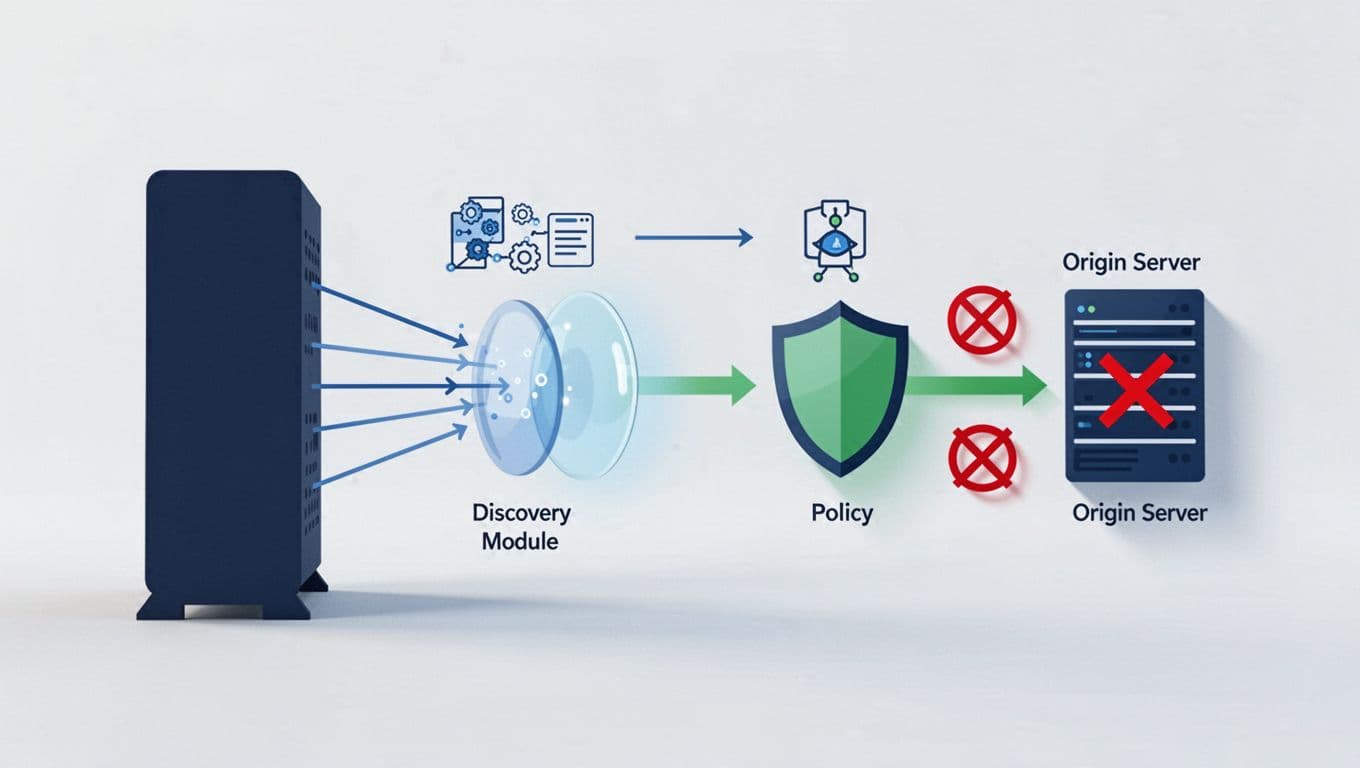
Cloudflare API Shield helps you move from “unknown traffic” to governed, observable traffic. It does that with api discovery, schema validation, strong identity checks, and edge controls that reduce load before requests hit origin systems.
Discovery, schema validation, and strong identity controls
Discovery builds your api inventory from observed traffic. Then schema validation lets you validate requests against what your API should accept. That positive security model is powerful because it blocks bad input even when the request looks normal on the surface.
Identity controls matter next. Mutual TLS and JWT validation help verify that clients are who they claim to be. Cloudflare’s security mapping for API Shield ties these controls to the OWASP API Security Top 10, including broken authentication, broken function access, and SSRF.
Rate limiting, DDoS protection, and anomaly detection at the edge
Edge filtering is where Cloudflare is strongest. Suspicious api traffic can be slowed or blocked before it burns origin CPU, database calls, or vendor API quotas. That reduces both downtime and cost.
This is also where related tools matter. If bot-driven abuse is part of your threat mix, comparing Cloudflare bot management for enterprises alongside API controls gives you a fuller picture of attacker friction, especially against automated credential abuse and resource exhaustion.
Free virtual cards for non-EU residents
Open in 1 working day, issue 100 virtual cards, and get up to 1.25% cashback.
Get a free account
What lower Cloudflare plans can do, and what Enterprise adds
Plan boundaries matter because the full Cloudflare api security stack is not spread evenly across tiers. Cloudflare’s 2026 documentation says the full API Shield suite is an Enterprise paid add-on, while some capabilities are broader.
| Capability | Lower tiers | Enterprise |
|---|---|---|
| Endpoint management | Available | Available |
| Schema validation | Available | Available, deeper governance fit |
| Mutual TLS with Cloudflare-managed CA | Available | Available |
| WAF and rate limiting | Available by plan | Available with broader policy depth |
| Full API Shield suite, advanced discovery, posture features | Limited | Yes, primary fit |
What lower tiers can still do for API protection
If you’re not on Enterprise, you can still protect api endpoints with WAF rules, rate limiting, endpoint management, some schema validation access, and basic mutual TLS support. That is a solid start for smaller teams.
How Enterprise handles protection at a deeper level
Enterprise is where Cloudflare fits larger API estates. You get broader Cloudflare API Shield coverage, stronger governance, and better support for multi-team ownership, compliance reviews, and large api inventory cleanup. For a company with dozens of services and partner integrations, that gap matters.
Cloudflare from a buyer’s point of view, likes and dislikes
What teams tend to like most:
- Fast deployment at the edge, with little change to origin systems
- Strong visibility into unknown endpoints and api traffic
- Useful layers for web application and api protection in one platform
- Good fit if you already use Cloudflare’s network and web app controls
What may frustrate buyers:
- Product naming can blur API Gateway, API Shield, and general application security
- Advanced features lean Enterprise, so budget planning takes work
- Schema setup and validation tuning still require internal ownership
- No vendor can fix weak business logic on its own
Pricing, discounts, and total cost
Cloudflare pricing for advanced api security usually depends on plan level and sales engagement. If you need deeper discovery, stronger validation, and posture controls, expect an Enterprise conversation rather than self-serve checkout.
If you’re cost-checking options, this offer is worth a look: Cloudflare discount, up to 25% off at Spendbase.
You should compare more than license cost. Include breach risk, outage time, cloud overuse from abusive api requests, and the labor saved when discovery turns a messy endpoint list into a real operating model.
How to strengthen API security if you are not on Cloudflare Enterprise
Start with inventory, auth, validation, and rate limits
Start with the basics in order. Document active endpoints, remove forgotten test APIs, require strong authentication, validate requests and responses, and add rate limiting to high-risk flows. Protect the APIs that handle money, identity, exports, and admin actions first.
Add process controls so shadow APIs do not come back
Technical controls help, but process keeps the mess from returning. Add API review to CI/CD, assign schema ownership, set deprecation rules, review each third-party api, and run regular inventory checks. That is how you prevent data exposure instead of cleaning it up later.
Top alternatives to compare in 2026
If Cloudflare is not your fit, these vendors are the most likely shortlist:
Akamai, F5, and Imperva
These are strong enterprise options for large-scale web application security and api security solutions. Pricing is usually custom quote. You get mature controls and broad coverage, but you may face more setup complexity and higher cost.
Salt Security and Noname Security, now part of Akamai
These platforms are known for API-focused discovery and posture visibility. Pricing is quote-based. They can give you sharp insight into shadow APIs and api risks, though integration effort and budget can be heavier than buyers expect.
Google Apigee
Apigee is a better fit when you want full API management, governance, analytics, and a developer platform, not only security. Pricing is usage-based or enterprise-style. It is powerful, but cost and rollout time can rise quickly.

We can unlock discounts on 10,000+ tools you already use.
Conclusion
Hidden APIs create hidden risk, and that risk rarely stays hidden for long. In 2026, good api security starts with visibility, because your undocumented endpoints are often the easiest path to data exposure, abuse, and wasted spend.
Cloudflare can help you discover and protect apis at the edge, especially when you pair discovery with schemas, authentication, rate limiting, and clear ownership. Your next move is simple: audit your api inventory, review the top OWASP risks, and check whether your current plan, or an alternative, matches the risk you actually carry.


Get discounts on your team’s favorite apps
Find deals for 10%, 30%, or even 70% off in our discount marketplace.
Check Discounts