




How You Choose Bot Management Solutions for Enterprise in 2026

Bots now drive roughly 49% to 51% of internet traffic in 2026, and automated traffic is growing faster than human traffic. If you lead product, engineering, finance, or infrastructure, that number hits your roadmap, your margins, and your uptime all at once.
You don’t buy Bot Management only to block bad traffic. You buy it because scrapers can strip pricing data, credential stuffing can flood login flows, inventory abuse can empty shopping carts, and unwanted automation can slow your site, distort analytics, raise cloud spend, and chip away at customer trust. Even “good bots” need rules, because search engine crawlers, AI agents, and verified bots still compete for capacity when your app is under pressure.
This guide will help you sort signal from sales copy, with fresh market numbers, intent-based detection, vendor comparisons across Cloudflare, Akamai, Imperva, Radware, F5, and PerimeterX, now HUMAN Security, plus pricing realities and real-world use cases. If you’re weighing Cloudflare early, it helps to review Cloudflare bot protection features and check up to 25% off Cloudflare plans for a quick cost benchmark before you compare the field.
What enterprise bot management really protects in 2026
In 2026, Bot Management protects much more than logins and uptime. It protects your margin, your inventory accuracy, your ad yield, your cloud bill, and the trust customers place in your app when they expect real availability and fair pricing.
That matters because bot traffic now makes up about 51% of all internet traffic, and AI bot traffic is rising far faster than human traffic. For enterprise teams, the risk is not abstract. Cheap automation lets attackers test, scrape, reserve, retry, and repeat at scale, while you pay for origin load, support friction, broken analytics, and lost conversion.
How scrapers quietly drain margin from inventory and pricing
Scraping is often treated like a nuisance. In practice, it is a margin leak. A scraper can poll your product pages, APIs, and shopping carts every few seconds, then feed that data into a rival’s pricing engine or a reseller’s buying bot. You absorb the compute cost, while they harvest the upside.
The pattern is simple. A bot watches your prices, inventory, and release cadence. Then another system uses that data to automate undercutting, stock hoarding, or resale. In retail, that means price pressure. In travel, it means fare intelligence and seat monitoring. In ticketing, it means hold abuse and fake scarcity. In marketplaces and large publishers, it means content extraction and ad-value dilution.
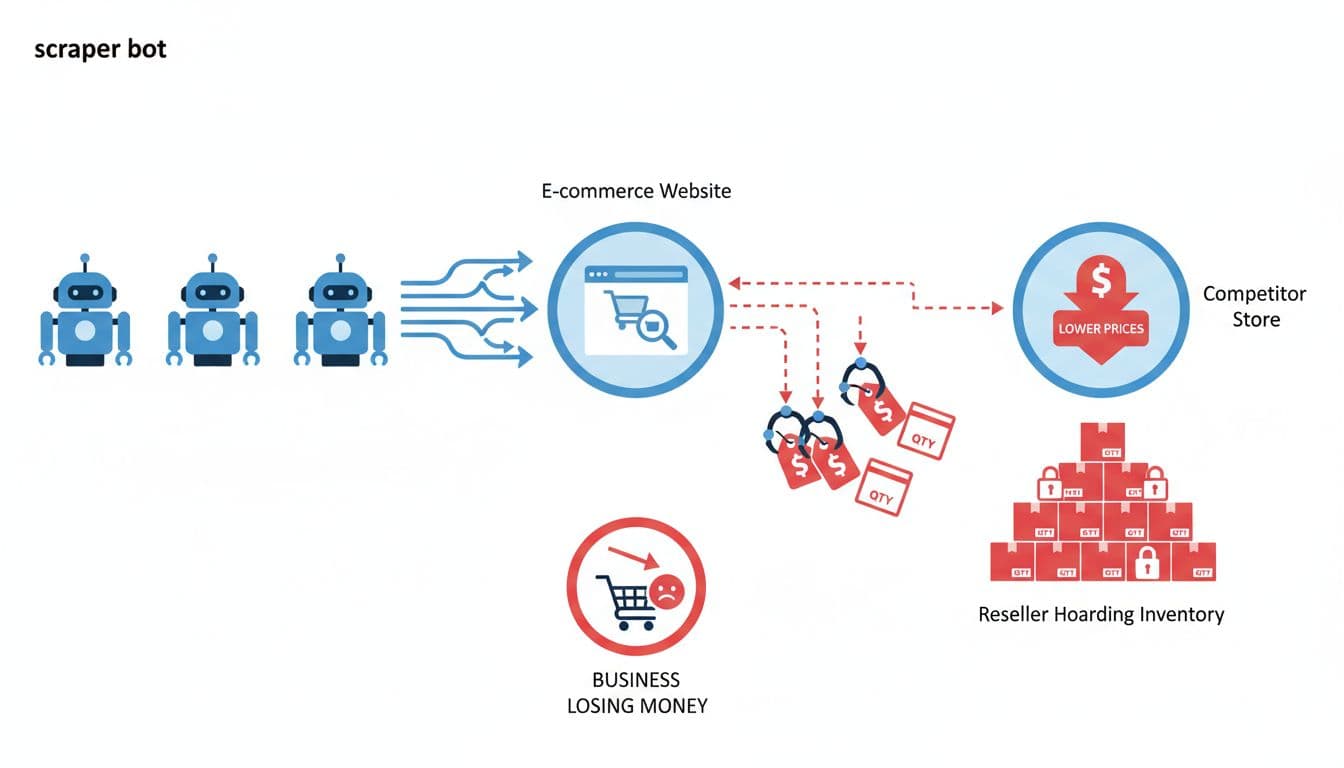
You can see the business impact more clearly in this breakdown:
| Attack pattern | What the bot automates | What you lose |
|---|---|---|
| Price scraping | Constant collection of prices, promos, shipping, and discounts | Margin, pricing power, and campaign secrecy |
| Inventory monitoring | Real-time checks on stock by SKU, route, seat, or event | Product availability data and launch control |
| Denial of inventory | Temporary reservation of rooms, seats, tickets, or limited stock | False scarcity, lower conversion, frustrated buyers |
| Fake carting | Adding high-demand items to shopping carts without intent to buy | Lost sales windows and distorted demand signals |
| Content scraping | Bulk copying of articles, reviews, listings, and product info | Monetization loss and weaker publisher yield |
For an attacker, this is a strong ROI play. They can automate cheaply with rotating proxies, headless browsers, and scripts that mimic human behavior. Meanwhile, your systems still render pages, execute JavaScript, hit databases, call APIs, and write noisy events into analytics. Weak bot hygiene turns your own stack into their data pipeline.
A real example is publishing. Recent reporting on AI crawler activity showed a sharp rise in third-party scraper pressure on publishers, with commerce and media taking much of the hit. Digiday covered new Akamai data showing a surge in AI bot and scraper traffic aimed at publishers and commerce-heavy pages, where premium content and affiliate data are easy to repurpose at scale. See Digiday’s report on publisher scraper activity.
Retail and ticketing face an even harsher version because inventory is perishable. A held seat, room, or limited-release item can expire unsold. Your dashboard may still show “demand,” but the demand is synthetic. Finance reads one story, growth sees another, and operations pays the bill.
This is where Bot Management earns its keep. It helps you separate good bots and verified bots from scraper networks, then apply the right controls by path, endpoint, and intent. You do not want to block every crawler. You want to detect and mitigate the ones that hit pricing, inventory, and cart flows in real time.
A practical way to frame it is this:
The attacker pays for scripts and proxy time. You pay for traffic, cache misses, support noise, lost inventory, and weaker pricing discipline.
The highest-risk sectors share the same pressure points:
- Enterprise retail loses margin when scraper bots feed rival pricing engines.
- Travel loses inventory integrity when bots monitor fares and reserve seats without purchase intent.
- Ticketing loses fairness when fake carting creates scarcity before fans ever click “buy.”
- Marketplaces lose trust when bots harvest listing data and automate arbitrage.
- Large publishers lose ad and subscription value when AI crawlers copy content at scale.
The upside of stronger controls is clear, but there is a tradeoff to manage:
Pros
- You protect margin on products with dynamic pricing.
- You reduce malicious bot traffic on cart and inventory endpoints.
- You clean up analytics, so demand models stop learning from bot noise.
Cons
- Aggressive controls can add friction if your bot score and custom rules are weak.
- Some scraper traffic will shift to APIs and mobile apps if web defenses improve.
- Large enterprises still need team alignment, or detection data stays trapped in separate dashboards.
Why bigger companies often have bigger blind spots
A bigger company has more security tools, more logs, and more people. It does not mean you are safer from bot attacks. In many enterprise stacks, size creates gaps because ownership is spread across too many systems and teams.
One app may sit behind one CDN, while a second brand runs on another. Your marketing site, checkout, mobile apps, partner APIs, and account portal may all use different security settings. Add vendor overlap, inherited rules, old WAF policies, and siloed analytics, and you get a familiar result: no one sees the full bot story.
The problem usually looks like this:
| Enterprise reality | What it creates | What gets missed |
|---|---|---|
| Many apps and domains | Different bot policies by property | Attackers pivot to the weakest path |
| Multiple CDNs and vendors | Split telemetry and mixed detection models | No shared bot score or baseline |
| Old security settings | Legacy allowlists and stale rate limiting | Verified bots mixed with unwanted bot traffic |
| Separate teams | Security, fraud, platform, and growth review different dashboards | Bot activity looks small in every silo |
| Heavy API and mobile app use | Focus stays on the web front end | API scraping and mobile automation slip through |
That split ownership is why bot detection often fails in large companies. Security sees suspicious requests. Fraud sees chargebacks and fake signups. Platform sees load and origin stress. Growth sees odd funnel behavior. Each team sees a shard of glass, not the broken window.
A recent enterprise lesson from adjacent AI infrastructure makes the same point. During the LiteLLM incident response described by SAP LeanIX, teams had trouble getting a complete view because different groups owned different layers of the stack. The security issue was real, but the visibility gap made response slower and harder. That same pattern hurts bot mitigation. See SAP LeanIX’s incident breakdown.
For bot management for enterprise, the blind spots usually cluster in five places:
- APIs that return product, price, or availability data faster than the web app.
- Mobile apps where automation replays calls that look normal at first glance.
- Account flows that mix bot attacks, credential stuffing, and promo abuse.
- Legacy business units that still run default rules from years ago.
- Analytics layers that count bot requests as interest, demand, or customer intent.
You can spot this in the field. A retailer blocks a web scraper but leaves the mobile endpoint exposed. A travel brand hardens search pages yet leaves fare APIs open to rapid polling. A publisher filters crawler traffic at the CDN but still sees origin spikes because a second vendor handles image delivery with weaker controls.
The fix is not only better detection. You also need common ownership. Your bot defense works best when teams share one baseline for traffic quality, one set of high-risk paths, and one view of what to block, challenge, rate-limit, or allow.
That gives you a cleaner operating model:
| If your stack has this issue | Your Bot Management program should do this |
|---|---|
| Several vendors with overlapping controls | Standardize detection and reporting across vendors |
| Old rules no one trusts | Review and tune custom rules by business risk |
| Separate dashboards for fraud and infrastructure | Put bot analytics in a shared dashboard with clear owners |
| Web-only controls | Extend detection to APIs and mobile app traffic |
| Mixed treatment of search engine and AI crawler traffic | Classify verified bots separately and enforce policy by intent |
Large companies still have advantages. You have more data, more budget, and more ways to deploy layered defense. But those strengths only help when you can see the bot, score the bot, and act on the same signal across teams.
If you cannot do that, scale becomes camouflage, and bad bots slip through the seams.
See how much you can save on your stack
Pick your team’s tools!
Click to select one or more tools.


What’s your company size?
Just click to select.
What’s your business email?
We'll send you calculations right away
The email is flying to your inbox!
Beyond discounts, you may qualify for up to $100K in AWS credits.

Why weak bot hygiene makes automated attacks so profitable
Weak bot hygiene turns your app into an easy mark. Attackers don’t need a dramatic breach when they can automate thousands of small wins across login, cart, checkout, and content paths. In practice, the damage often shows up in revenue and operations before security even labels it an incident.
For Bot Management, that changes the buying lens. You are not only filtering unwanted traffic. You are trying to stop business loss, protect customer trust, and keep analytics clean enough to make sound decisions.
The attacks that hit revenue first, not just security teams
Some bot attacks trigger a SOC alert. Others hit your P&L first. Credential stuffing, account takeover, carding, checkout abuse, fake signups, spam, coupon abuse, content scraping, and AI crawler overuse all monetize the same weakness: cheap automation against expensive business workflows.
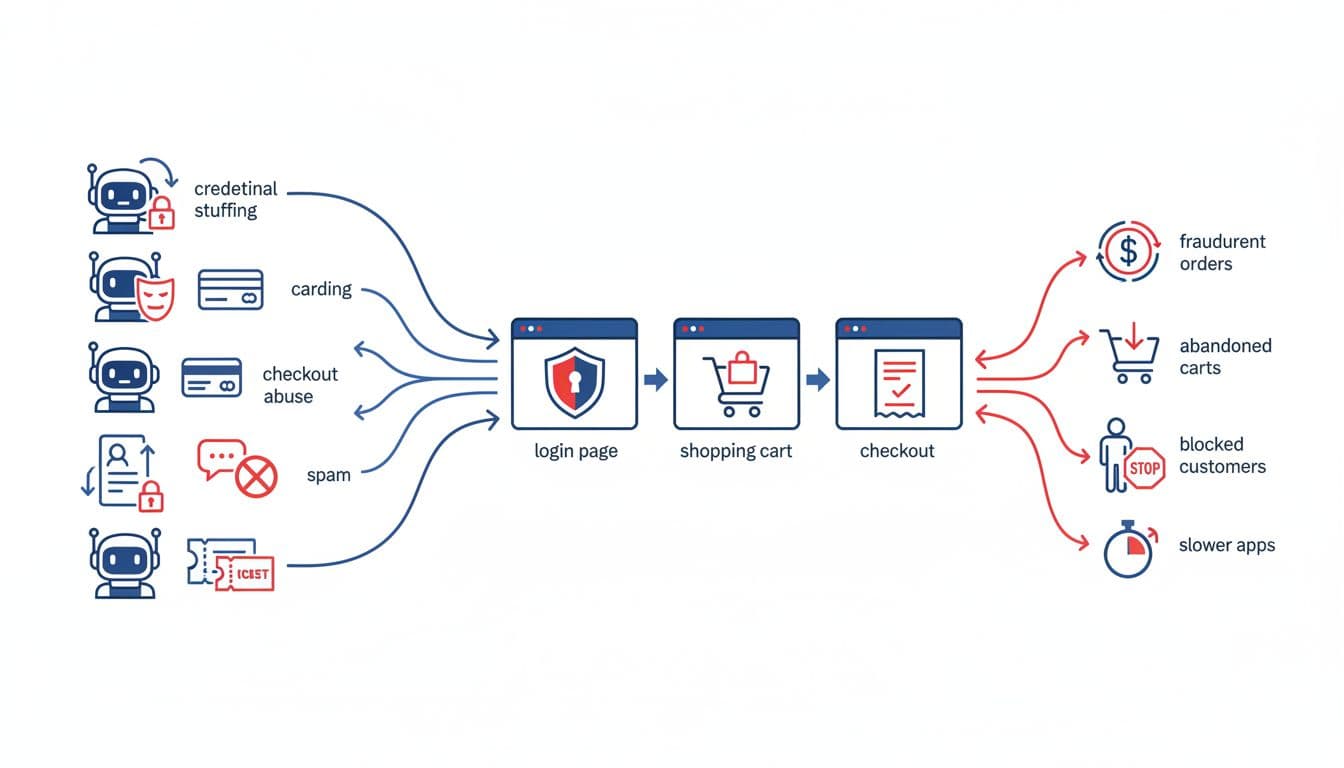
If your defenses are loose, attackers can automate 24/7 while you pay for compute, support, fraud review, and lost sales. Fresh 2026 data shows bots now make up about 50% to 51% of internet traffic, while bad bots account for about 37%. In retail, holiday bot traffic has spiked to 28% during peak periods, and AI crawler pressure now touches a large share of commerce pages.
The fastest business hits usually look like this:
| Attack type | What the bot does | What you see first |
|---|---|---|
| Credential stuffing | Tests stolen logins at scale | Login failures, locked accounts, support tickets |
| Account takeover | Uses valid accounts for fraud | Refunds, loyalty theft, angry customers |
| Carding | Tests stolen cards at checkout | Fraudulent orders, chargebacks, payment friction |
| Checkout abuse | Holds carts or retries payment flows | Abandoned carts, lower conversion, slower checkout |
| Fake signups and spam | Creates junk accounts and form fills | CRM pollution, promo waste, sales noise |
| Coupon abuse | Reuses or brute-forces promo codes | Margin loss, campaign distortion |
| Content scraping | Copies product or publisher content | Rival price response, SEO dilution, origin load |
| AI crawler overuse | Crawls pages too often and too deep | Slower apps, cache churn, higher infra cost |
Some of these attacks feel small in isolation. Together, they act like a leak in several pipes at once. Revenue slips, while the dashboard still claims demand is healthy.
Recent reports back that up. Netacea says businesses lose an average of 4.3% of online revenue to bots, and many take months to detect the pattern. HUMAN has also reported heavy bot pressure in retail and e-commerce, especially around inventory abuse and fake account creation. If you want the business lens, Radware’s breakdown of bot attack KPIs is useful, and Netacea’s revenue loss report puts a hard number on the damage.
A few attack paths usually hurt first:
- Checkout and payment paths because fraud becomes visible in chargebacks and failed orders.
- Login flows because account takeover pushes customers into password resets and support queues.
- Cart and inventory endpoints because fake holds block real buyers.
- Pricing and content pages because scrapers feed competitors and AI systems.
The pattern is simple enough to map:
| Weak control | Attacker action | Business impact |
|---|---|---|
| Loose login protection | Credential stuffing | ATO, support costs, churn |
| Weak checkout bot protection | Carding and retries | Fraud loss, payment declines |
| No cart controls | Fake reservations and hoarding | Abandoned carts, blocked customers |
| No crawl policy | Scraping and AI overuse | Slower app, origin stress, copied content |
Roku’s public account incident showed how even a limited number of fraudulent purchases can trigger refunds, help-desk strain, and trust damage. Microsoft has also disclosed password attack volume at industrial scale. That is why Bot Management for enterprise cannot stop at simple rate limiting.
The most profitable bot attacks are often the least dramatic ones, because they blend into normal business traffic while draining margin every hour.
There is a tradeoff, of course.
Pros of tighter bot controls
- You mitigate malicious bots before fraud spreads downstream.
- You protect shopping carts, promos, and checkout without waiting for chargebacks.
- You give finance and growth teams cleaner analytics.
Cons if you tune too aggressively
- You can block good bots or verified bots by mistake.
- You may add friction for real customers if detection models are weak.
- You still need to cover API and mobile apps, or attackers will switch paths.
If Cloudflare is on your list, you can review the Up to 25% off Cloudflare discount at Spendbase for a quick cost benchmark before you compare add-on pricing across vendors.
How bad bot traffic hides inside normal dashboards
Bad bot traffic rarely arrives wearing a mask labeled “bot.” It shows up as sessions, clicks, form fills, and page views that look close enough to human behavior to pass a casual glance. That is why weak visibility makes automated attacks so profitable.
Standard analytics and CDN views often understate the problem because modern bots mimic human behavior. They pause between clicks, execute JavaScript, rotate proxies, and spread requests across residential IPs. A sophisticated bot can crawl low and slow, avoid obvious DDoS patterns, and distribute requests across many endpoints so no single IP looks abusive.
That creates a blind spot in the dashboard:
| What your dashboard shows | What may actually be happening |
|---|---|
| Rising sessions | Browser automation from rotating residential proxies |
| Higher page views | Low-and-slow scraping across product pages |
| More signups | Fake account creation for promo abuse |
| Stable CDN hit rate | Distributed bot traffic still hammering origin servers |
| Normal bounce rate | Account takeover bots replaying realistic flows |
The problem gets worse when teams rely on simple IP blocks or basic rate limiting. Those controls still matter, but they were built for noisier attacks. Today’s malicious bot traffic uses distributed attack patterns, residential proxy networks, and browser-based automation that can slip past old security settings.
A CDN dashboard may tell you requests are cached and delivered. It may not tell you whether those requests were useful, fraudulent, or hostile to margin. That gap can distort analytics by 50% to 83%, according to fresh 2026 summaries, which means growth, fraud, and infra teams may all be reading the same traffic and drawing the wrong lesson.
For better Bot Management, you need visibility that goes beyond request counts:
- You need path-level detection by login, checkout, search, and account endpoints.
- You need device, behavior, and intent signals, not just IP reputation.
- You need a bot score that helps customize custom rules by risk.
- You need one baseline across web, API, and mobile apps.
Security Boulevard’s retail guidance on credential stuffing and bot attacks explains why browser automation and human-like replay now bypass older controls. For threat context at a broader level, Cognyte’s 2026 threat report shows how AI is lowering the cost of attack execution across security teams’ usual blind spots.
If your dashboard measures volume but not intent, bad bots can look like growth, while customer experience gets worse.
This is where advanced bot management earns its place. It lets you detect and mitigate more than obvious scraping or brute force. You can classify good bots, verified bots, and unwanted bot activity in real-time, then deploy Bot Management controls that fit the path, the user flow, and the business cost of getting it wrong.
Why intent-based detection is now a business imperative
If you still judge a bot by its IP address or user agent string, you are looking at the mask, not the motive. In 2026, that gap costs money. Bots now make up about 51% of internet traffic, and AI-driven traffic is rising much faster than human traffic, according to HUMAN’s 2026 benchmark report. For you, that means Bot Management has to answer a harder question: what is this traffic trying to do inside your app?
That is why intent-based detection has become a business control, not just a security feature. It helps you catch scraping, fake account creation, credential stuffing, API abuse, and automated checkout attempts before they distort revenue, analytics, and customer experience.
What modern detection looks at beyond IPs and user agents
A modern bot rarely walks through the front door in obvious disguise. It rotates proxies, runs a real browser, executes JavaScript, and waits between clicks. Some even mimic human behavior well enough to look clean in a basic dashboard. That is why advanced Bot Management stacks use multi-layered detection instead of one simple rule.

Good bot detection starts with behavior analysis. You watch how a visitor moves through pages, how long they pause, which paths they repeat, and whether their request sequencing matches a real session. A human shopper browses with small inconsistencies. A scraper or purchase bot tends to move with purpose, even when it tries to look casual.
Next comes machine learning. Instead of matching one known signature, the model scores patterns across millions of requests in real-time. That helps you spot a sophisticated bot that changes IPs, headers, and timing but still shows the same intent. Recent 2026 reporting also shows AI agent browsers surged 7,851% year over year, which makes static rules less useful on their own.
These are the layers that usually matter most:
| Detection layer | What it checks | What it helps you catch |
|---|---|---|
| Behavior analysis | Mouse flow, timing, navigation rhythm, session depth | Scraping, fake signups, cart abuse |
| Device and browser fingerprinting | Canvas, fonts, WebGL, hardware clues, browser quirks | Spoofed browsers, anti-detect frameworks |
| JavaScript telemetry | Script execution, event generation, DOM interaction | Headless automation, tampered browsers |
| Request sequencing | Order of requests across pages and endpoints | Credential stuffing, checkout bots, crawlers |
| API pattern analysis | Call frequency, payload shape, token use, endpoint hopping | API scraping, mobile app replay, fraud bots |
| Verified bot checks | Known bot identity and declared purpose | Search engine bots, partner crawler access |
| Real-time scoring | Combined signal into one bot score | Fast allow, challenge, or block decisions |
No single signal wins on its own. Fingerprinting can spot reused environments, but some tools randomize fingerprints. JavaScript telemetry catches weak browser automation, but stronger bots execute scripts well. API patterns expose abuse in mobile apps and backend calls, yet they need context from other signals. Put together, these layers create a picture of intent.
For example, a request may arrive from a clean residential proxy with a common Chrome user agent. On the surface, it looks normal. However, if the browser fingerprint repeats across dozens of IPs, the JavaScript events look synthetic, and the request path hits product, inventory, and cart endpoints in a tight loop, your Bot Management platform can score that as malicious bot traffic and respond before origin servers take the hit.
You can see the shift in vendor design, too. Intent-based engines such as Netacea Talos and Radware’s deep behavior analysis focus less on “who claims to be visiting” and more on “what the visitor is trying to automate.” That change matters because a search engine crawler, an AI agent, and a malicious scraper may all look programmatic. Their intent is what separates good bots from unwanted bot threats.
A real-world example makes this clearer. Arkose Labs’ social broadcasting case study describes a platform that stopped bot-driven fake accounts by moving past simple edge filters and using stronger behavior-based controls. The fake accounts looked like normal signups at first. The underlying patterns gave them away.
In 2026, the strongest bot defense is not a bigger deny list. It is a better read on intent.
There is a tradeoff, of course.
Pros
- You catch advanced bot activity that old IP rules miss.
- You protect web, API, and mobile apps with one detection baseline.
- You get cleaner analytics and a more useful dashboard.
Cons
- You need tuning, because raw models can overreact on edge cases.
- You may need additional control for high-risk flows such as login or checkout.
- You need shared ownership across security, fraud, and platform teams.
How to block bad bots without hurting good users or good bots
Detection only matters if your response is precise. If you block too hard, you hurt conversion. If you block too softly, you absorb scraping, fraud, and cloud cost. Strong Bot Management gives you a risk-based response ladder instead of one blunt action.
You do not want every suspicious request to hit a CAPTCHA wall. A low-risk anomaly may deserve monitoring. A medium-risk session may need a challenge. A high-risk sequence hitting login or checkout may need tarpitting, rate limiting, or a full block. Meanwhile, verified bots and useful crawlers still need a clear path when they follow policy.
This is the decision logic that usually works best:
| Risk level | Typical signal mix | Best response |
|---|---|---|
| Low | Slight anomaly, no harmful pattern yet | Allow and monitor |
| Medium | Suspicious fingerprint, odd JavaScript behavior, minor scraping signs | Challenge or throttle |
| High | Repeated automation pattern, credential stuffing, API abuse, fake carting | Rate limit, tarpit, or block |
| Verified | Search engine or approved partner bot with known identity | Allow with guardrails |
That response ladder protects customer trust because it avoids punishing real people for every odd session. Your best users often behave in messy ways. They open many tabs, retry checkout, switch devices, and browse on privacy-focused browsers. If your bot protection is too aggressive, you will negatively impact signups, checkout completion, and brand confidence.
A simple policy set often works better than a giant rule book:
- Allow traffic with strong verified signals or low-risk scores.
- Monitor sessions that look unusual but not harmful.
- Challenge medium-risk visitors where friction is acceptable.
- Tarpit bots that automate at scale, so you waste their time instead of your compute.
- Rate limit high-volume endpoints such as search, login, and inventory APIs.
- Block traffic with clear malicious intent or repeated failed challenges.
You should also separate good bots from bad bots on purpose. Search engine crawlers, uptime monitors, partner integrations, and some AI agents may be useful to your business. The right policy is rarely “block all automation.” It is “allow the automation you trust, under rules you control.”
That distinction is showing up in market data. HUMAN reports that access decisions about a handful of AI bot operators now shape a large share of exposure, because a small set of companies drives most observed AI traffic. Akamai has also noted that many sites are shifting from total denial to more selective policy, depending on content value and crawl behavior, in its AI bot traffic analysis for 2026.
A marketplace case study helps here. Peakhour’s Gumtree example reports a 70% reduction in unwanted traffic after better bot mitigation. The gain was not just cleaner traffic. It also improved analytics, reduced infrastructure waste, and gave the platform more control over who could automate against it.
You can frame the response choices in business terms:
| Response option | Business upside | Business risk if overused |
|---|---|---|
| Allow | Low friction, strong conversion | Missed threat if scoring is weak |
| Monitor | No user friction, better tuning data | Slower mitigation |
| Challenge | Stops many automated attacks | Friction for real users |
| Tarpit | Burns attacker time, protects origin | Can add operational complexity |
| Rate limit | Protects app and APIs at scale | May throttle power users or partners |
| Block | Fast stop for clear threats | False positives can hurt revenue |
That is why custom rules still matter, even with machine learning. You need to configure policies by endpoint, risk, and business cost. A login page, pricing API, and product catalog should not all behave the same way. Your web application firewall and bot layer should work as one defense, not two disconnected tools.
If you are comparing vendor economics while you tune those controls, you can review the Up to 25% off Cloudflare discount for a quick cost benchmark. That is useful when you weigh a cloudflare bot add-on against other bot solutions.
A simple diagram to include in the full article
Add one visual that shows the full intent-based flow at a glance. Keep it simple, because the point is to help the reader scan the logic fast.
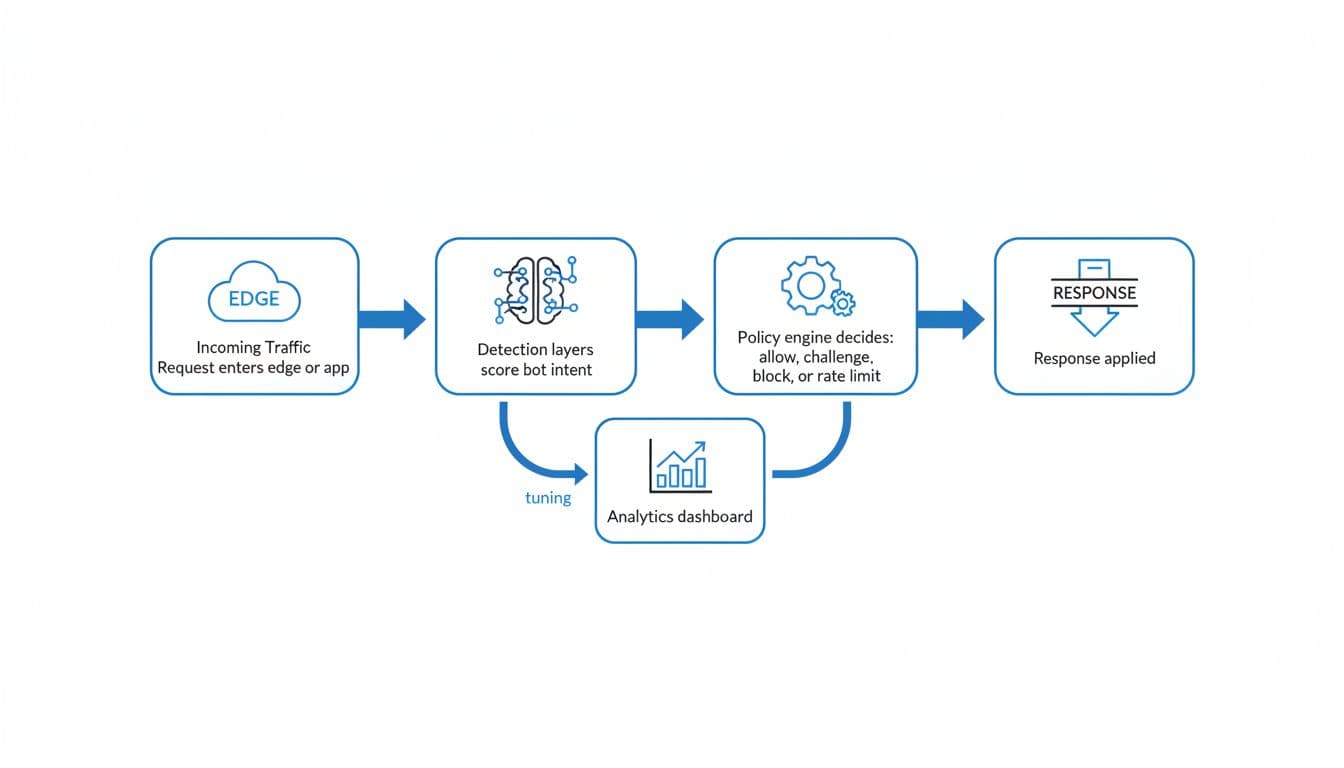
Use this sequence in the diagram:
| Step | What the diagram should show |
|---|---|
| 1 | Traffic request enters edge or app |
| 2 | Detection layers score intent |
| 3 | Policy engine chooses allow, challenge, block, or rate limit |
| 4 | Analytics dashboard feeds the tuning loop |
That one diagram does a lot of work for you. It shows that bot management for enterprise is a loop, not a one-time filter. Traffic comes in, detection assigns meaning, policy applies the right action, and the dashboard helps you tune the next decision. That is the operating model you want your reader to remember.
Bot management market outlook for 2025 and 2026, plus the trends shaping your shortlist
The bot management market is moving because the pressure is real, not because vendors need a new category slide. Current forecasts put the market at about $3.9 billion in 2025, with steady double-digit growth carrying into 2026 and beyond, although totals vary by report based on what each firm counts as bot protection, mitigation, or security software. What matters for you is simpler: buyers now spend more because bot abuse hits revenue, cloud cost, fraud loss, and analytics at the same time.
That shift changes how you build a shortlist. In 2026, the best platforms are not just good at bot detection. They also fit your stack, cover your APIs and mobile apps, and automate response in real-time without forcing your team into months of tuning. For a market snapshot, Custom Market Insights’ bot management forecast is a useful reference point.
| Market view | 2025 estimate | 2026 direction | What it means for you |
|---|---|---|---|
| Bot management market | $3.9B | Continued growth | Budget pressure rises, but so does vendor maturity |
| Bot mitigation market | $779M | $944M | More buyers want focused mitigation, not generic WAF rules |
| Bot security market | $1.05B | $1.27B | Security teams are folding bot defense into broader risk programs |
The table tells a clear story: naming differs, but demand is climbing across the board.
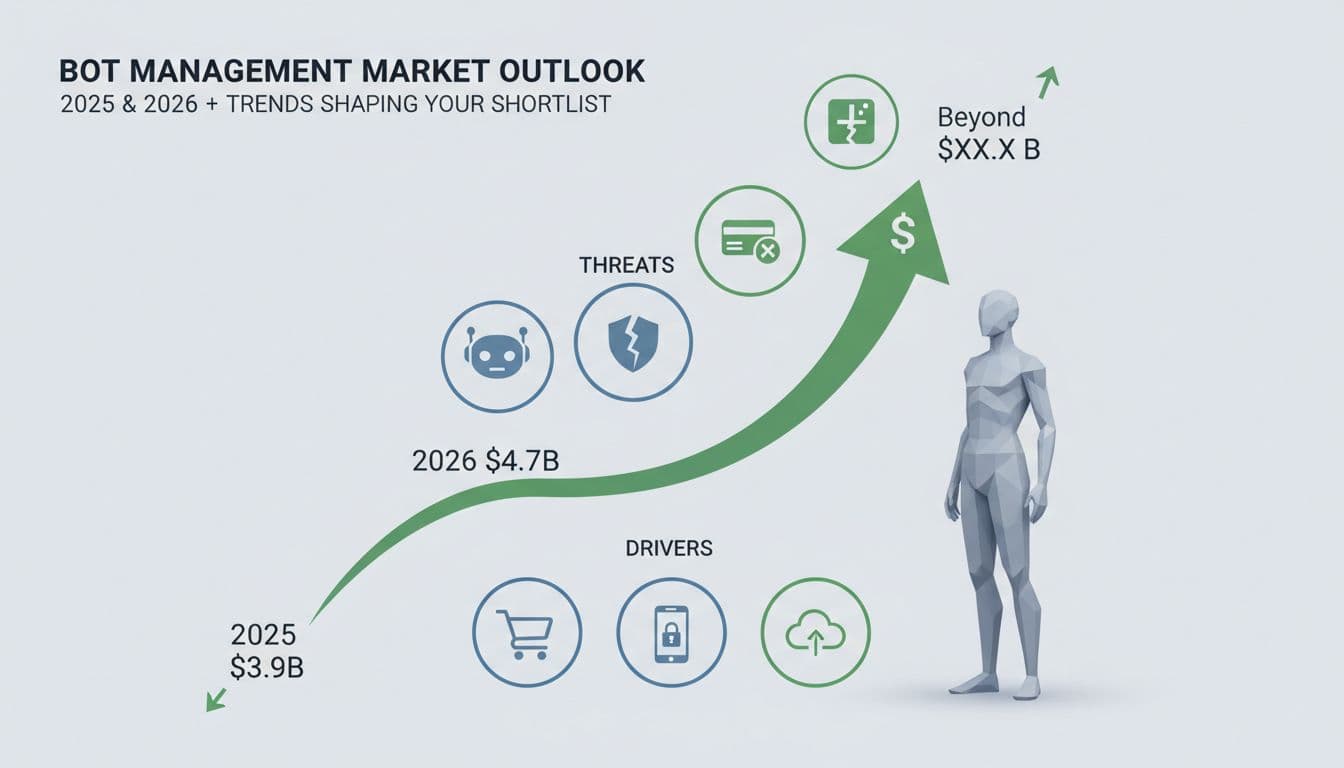
The biggest drivers, threats, and opportunities buyers should watch
If you’re ranking vendors for Bot Management, you need a clean view of what is pushing the market, what is making defense harder, and where the upside sits after deployment.
Drivers
- More digital transactions create more attack surface, especially across login, checkout, search, and account flows.
- Rising automated abuse, including scraping, credential stuffing, fake signups, and inventory hoarding, makes manual controls too slow.
- AI tools lower the cost to automate attacks, so even small operators can run a sophisticated bot against your app.
- More enterprise teams now tie bot traffic directly to cloud spend and fraud exposure, not just security alerts.
Threats
- AI-enhanced evasion helps malicious bots mimic human behavior, rotate fingerprints, and adapt faster to static rules.
- Attack paths are spreading across web, API, mobile apps, and partner endpoints, which raises operational complexity.
- False positives still hurt real users, so weak tuning can damage conversion and customer trust.
- Many teams still rely on split dashboards, inherited security settings, and point tools that do not share a common baseline.
Opportunities
- Stronger bot mitigation can cut fraud and reduce scraper pressure before it hits revenue.
- Better filtering lowers cloud and origin costs because you stop paying to serve unwanted traffic.
- Cleaner analytics help finance, product, and growth teams trust demand signals again.
- More mature platforms can now automate mitigation in real-time while still letting you customize policies for high-risk flows.
A few case studies show why buyers are taking this seriously. Netacea’s luxury retail case study reports 73% fewer web requests and lower CPU use after stronger bot control. Cloudflare’s Pacsun case study describes viral sales events where bot abuse had flooded the site before improved edge protection.
What is changing in vendor selection in 2026
In 2026, your shortlist should look less like a feature checklist and more like an operating model. Buyers still care about detection quality, but they now press harder on API coverage, mobile app protection, ease of deployment, tuning effort, false positives, and dashboard quality. A vendor can post great block rates in a demo and still fail in production if the setup is brittle or the reporting is too thin to guide custom rules.
You also need to look at platform fit. Bot solutions now win more deals when they integrate well with your WAF, CDN, DDoS controls, fraud stack, and identity tools. If your bot layer cannot share signals across those systems, your team ends up chasing the same attack in five places. HUMAN’s buyer guide and Cequence’s selection criteria both reflect this shift.
Here is the practical lens buyers are using now:
| Selection factor | Why it matters in 2026 | What to ask vendors |
|---|---|---|
| API coverage | Attackers often switch to APIs first | Can you detect and mitigate abuse across APIs with the same bot score? |
| Mobile app protection | Mobile flows are no longer a side channel | Do you support SDKs, attestation, and mobile-specific detection? |
| Ease of deployment | Long rollouts slow ROI | How fast can you deploy baseline protection without breaking flows? |
| Tuning effort | High-maintenance tools burn team time | How much manual work is needed each month? |
| False positives | Friction hurts revenue | How do you measure and reduce good-user impact? |
| Dashboard quality | Visibility drives better decisions | Does the dashboard show path-level risk, trends, and mitigation outcomes? |
| Stack integration | Point tools create blind spots | How well do you integrate with WAF, CDN, DDoS, and fraud systems? |
That table is where many shortlists shrink fast.
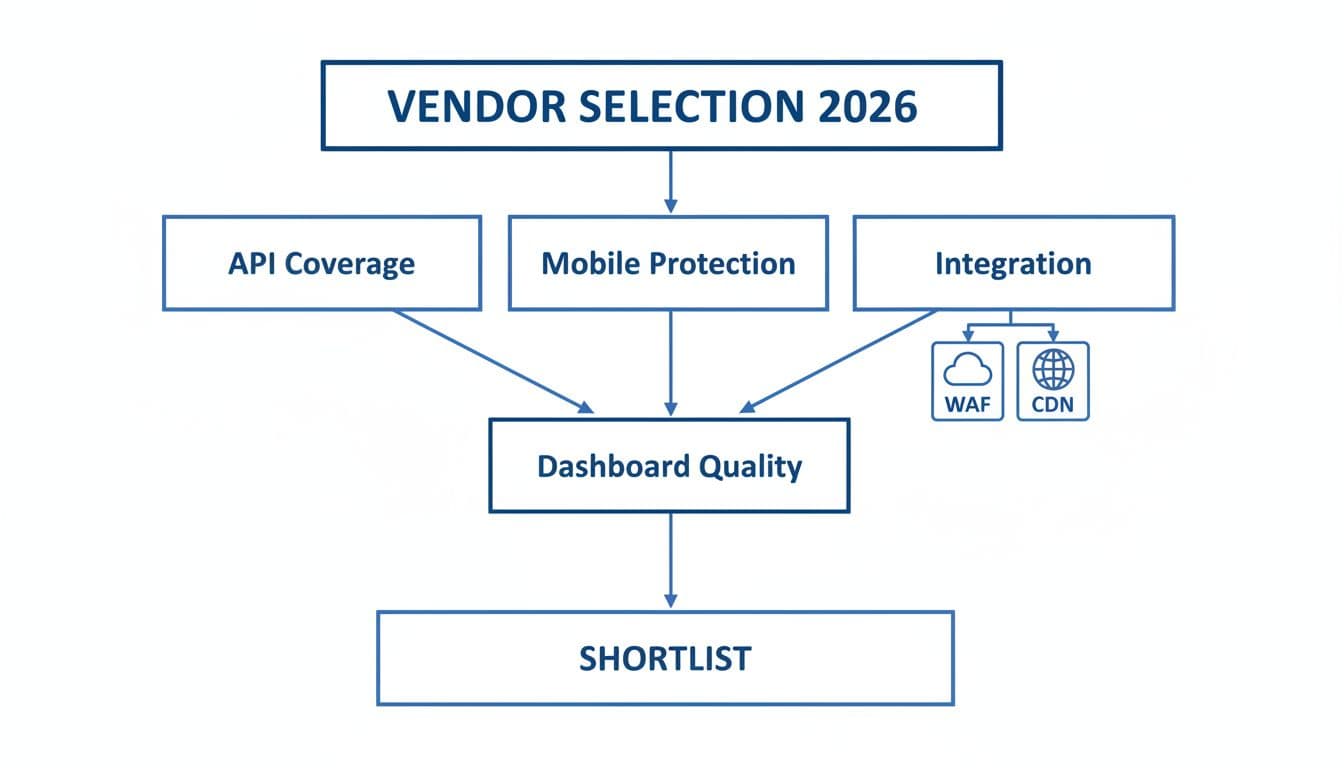
The strongest vendors now do two things at once. They automate mitigation in real-time, and they still let you customize responses by endpoint, risk, and business cost. That balance matters because a pricing crawler, a checkout bot, and a verified search engine bot should not trigger the same action.
There is a tradeoff, of course.
Pros
- You get faster bot mitigation with less analyst drag.
- You can protect web, API, and mobile apps under one policy model.
- You gain better analytics and clearer vendor accountability.
Cons
- More automation can hide logic if the dashboard is weak.
- Deep customization may still require skilled tuning.
- Broad platforms can raise cost if you buy add-ons you do not need.
If Cloudflare is on your list, you can review the Up to 25% off Cloudflare discount at Spendbase for a quick cost benchmark while you compare add-on pricing, cloudflare bot controls, and broader enterprise bot management packages.
Free virtual cards for non-EU residents
Open in 1 working day, issue 100 virtual cards, and get up to 1.25% cashback.
Get a free account
How the top enterprise bot management vendors compare
When you compare Bot Management vendors, the biggest mistake is treating them like interchangeable filters. They are not. Each one has a different center of gravity, and that affects deployment speed, tuning effort, fraud coverage, and how well the tool fits your stack.
If you run a large enterprise, you should match the vendor to your traffic shape and business risk. A retailer fighting fake engagement has different needs than a bank dealing with credential stuffing, or a media company trying to control scraping and crawler pressure.
Akamai, Cloudflare, and Imperva, where each one tends to fit best
Akamai, Cloudflare, and Imperva all cover core bot detection and mitigation, but they tend to shine in different places. Akamai is usually the best fit when you have massive traffic, complex routing, and a deep edge footprint already in place. If your app estate spans regions, brands, and high-stakes user flows, Akamai often feels like the heavy industrial option.
Cloudflare is usually easier to deploy fast, and that matters when you need value this quarter, not after a long rollout. Its network integration is a big advantage if you also want DDoS protection, a web application firewall, and rate limiting under one roof. Cloudflare Bot Management also uses bot scoring, which helps you sort low-risk traffic from high-risk automation and apply custom rules without turning every response into a hard block.
Imperva tends to fit best when you want strong multi-layer defense across app security controls and you’re already invested in Imperva security. For teams using Imperva for WAF and broader protection, the bot layer can feel more unified inside the same dashboard.
This side-by-side view keeps the tradeoffs clear:
| Vendor | Best fit | Typical strengths | Watch-outs |
|---|---|---|---|
| Akamai | High-scale enterprise with complex traffic | Deep edge coverage, mature bot detection, strong support for complicated environments | Can take more tuning and stakeholder alignment |
| Cloudflare | Teams that want fast deployment and broad network integration | Fast rollout, strong CDN and DDoS alignment, bot score, WAF pairing, rate limiting | Advanced controls may depend on plan structure and add-ons |
| Imperva | Security teams already invested in Imperva | Strong multi-layer protection, app security alignment, useful for mixed bot and app risk | Fit is strongest when Imperva is already part of your security stack |

You can also frame the choice by operating style:
- Akamai works well when your team can support a more involved setup and wants strong control at scale.
- Cloudflare fits when you want to automate deployment quickly and connect bot protection with edge security.
- Imperva fits when you want bot defense tied closely to broader app and data security layers.
PeerSpot’s 2026 bot management leaderboard shows all three in active enterprise consideration, which tracks with how buyers build shortlists today. Meanwhile, Fastly’s 2025 to 2026 bot management comparison also places these vendors in the top tier, especially for large web properties.
A practical example helps. If you run a global retailer and already depend on edge logic, Akamai may be the safer fit. If you need to roll out cloudflare bot controls across multiple sites fast, Cloudflare often wins on speed. If your security team already lives inside Imperva, using one vendor for several layers can reduce operational drag.
Pros
- You get strong vendor options for different enterprise environments.
- Cloudflare pairs well with WAF and rate limiting for unified defense.
- Imperva can simplify operations if your current stack already uses it.
Cons
- None of these platforms is a plug-and-play fix for every app.
- Pricing is usually custom, so simple apples-to-apples quotes are rare.
- The best product on paper can still fail if it does not match your team model.
Radware, F5, and HUMAN Security, where each one stands out
Radware, F5, and HUMAN Security fill different gaps in the market. Radware makes sense when you want layered app defense, not just narrow bot filtering. It is often a fit for teams that want bot protection tied closely to broader application security and traffic inspection.
F5 Shape Defense is strongest when account protection is the center of the problem. If you are dealing with login abuse, high-value sessions, or harder-to-stop bot attacks that mimic human behavior well, F5 stays near the top of the list. It has long been associated with tougher account defense use cases where weak detection models are not enough.
HUMAN Security is different again. It stands out for cyberfraud, account abuse, fake engagement, and retail protection. If your pain is less about simple scraping and more about fraudulent activity across customer journeys, HUMAN often deserves a serious look. If the name feels unfamiliar, that is partly because many buyers still remember PerimeterX as the former brand in this space.
The field looks clearer when you compare the core fit:
| Vendor | Where it stands out | Common use cases | Main caution |
|---|---|---|---|
| Radware | Layered bot and app defense | App security teams that want bot and threat controls together | May be more than you need for narrow use cases |
| F5 Shape Defense | Strong account protection | Login defense, account abuse, sophisticated bot attacks | Best value shows up in high-risk identity flows |
| HUMAN Security | Cyberfraud and fake engagement defense | Retail abuse, ad fraud, account fraud, fake traffic, abuse prevention | Can be overkill if you only need basic scraper blocking |
For extra context, comparison roundups such as Cotocus’s bot management overview and Gitnux’s 2026 bot protection software list place all three in the upper tier, but for different reasons. That split matters. A vendor can be excellent and still be wrong for your use case.
If you lead product or finance, ask one blunt question: where is the money leaking? If it is logins and account sessions, F5 often rises. If it is fake engagement or retail fraud, HUMAN usually looks stronger. If you need layered app defense plus bot controls, Radware is often the cleaner match.
The best Bot Management vendor is usually the one that matches your hardest workflow, not the one with the longest feature page.
Pros
- You can target high-value risks instead of buying generic bot tools.
- F5 is strong where login abuse and account protection drive the buying decision.
- HUMAN is well-suited for fraud-heavy environments, especially retail and digital media.
Cons
- Specialized strength can mean more cost or complexity.
- Some platforms show their full value only after tuning.
- Broader security overlap can create tool sprawl if roles are not clear.
Pricing reality, pros and cons, and a cost benchmark readers can use
Pricing is where vendor comparisons get fuzzy fast. Most enterprise Bot Management pricing is custom. Vendors usually quote based on traffic volume, request counts, protected apps, support level, and the amount of hands-on service you need. Because of that, you should treat public pricing claims with caution unless the vendor publishes them directly.
A useful way to handle this in your final article is to include a second table that compares vendor, pricing approach, typical strengths, and possible drawbacks. That helps readers judge value without pretending every platform has a clean public list price.
This simple diagram shows how cost usually rises as scope expands:
Here is a cost benchmark table you can use:
| Vendor | Pricing approach | Typical strengths | Possible drawbacks |
|---|---|---|---|
| Akamai | Custom quote, often tied to scale and service needs | Strong for large, complex traffic environments | Higher complexity, pricing often less transparent |
| Cloudflare | Plan plus enterprise add-on structure in some cases, custom for larger deployments | Fast to deploy, strong network integration, good for unified controls | Final cost can depend on add-ons and support tier |
| Imperva | Custom enterprise pricing | Multi-layer app security fit | Better value if you already use Imperva |
| Radware | Custom enterprise pricing | Layered bot and app defense | May exceed needs for narrower bot use cases |
| F5 Shape Defense | Custom enterprise pricing | Account protection and advanced attack resistance | Often best justified in high-risk account flows |
| HUMAN Security | Custom enterprise pricing | Fraud-heavy use cases, fake engagement, retail abuse | Can be hard to benchmark against simpler tools |
You should also keep the buying math simple. Most vendors price around some mix of these inputs:
- Traffic or requests, because more inspection means more cost.
- Protected properties, including apps, domains, APIs, and mobile surfaces.
- Support level, because managed help and tuning raise the quote.
- Deployment complexity, especially if you need custom integrations.
- Risk depth, because high-risk flows often need stronger controls.
That is why “cheapest” rarely means cheapest in practice. A lower quote can hide gaps in bot detection, analytics, or support. On the other hand, an expensive platform can be wasted if your real problem is limited to scraping on a few paths.
Pros
- Custom pricing can match your real traffic and support needs.
- You can negotiate around scope, terms, and deployment model.
- A benchmark table makes vendor comparisons easier for both technical and finance teams.
Cons
- Public pricing is often incomplete or absent.
- Comparing quotes takes more work than comparing feature sheets.
- Add-ons can change total cost after the initial proposal.
Your best move is to score vendors on fit, friction, and full cost, not sticker price alone. If a platform helps you mitigate malicious bots, reduce origin load, and clean up your dashboard, the return often shows up outside the security budget first.
Real-world use cases that show what good bot management looks like
Good Bot Management shows up in the numbers you care about: more products available for real buyers, fewer fraud reviews, cleaner analytics, and less time spent chasing noise. The best teams don’t chase every bot with one rule. They classify intent, protect the paths that matter most, and tune controls so real customers still move fast.
In 2026, that matters more because bot traffic now accounts for about 51% of all internet traffic, while 37% is bad bot traffic, according to HUMAN’s 2026 benchmark report. On commerce sites, the pressure is even tighter. Imperva reports that 30.8% of e-commerce traffic is bot traffic, and 17.7% is bad bots, with a growing share of advanced automation that can mimic human behavior and run JavaScript like a normal browser, based on Imperva’s e-commerce bot research.
E-commerce, marketplaces, and ticketing teams stopping scraper-led abuse
For retail, marketplaces, and ticketing, the problem rarely starts as a loud outage. It starts as a steady drain. A scraper watches prices every few seconds. A reseller bot grabs inventory the moment a hot product drops. A fake buyer fills shopping carts and never checks out. Soon your dashboard says “demand,” but your margin and product availability tell a different story.
Good bot management in these environments is layered. You don’t rely on one IP block or one CAPTCHA. You combine behavior signals, device checks, rate limiting, and path-level controls to read intent in real-time. That lets you slow a scraper, challenge a reseller bot, and allow good bots such as a search engine crawler or verified monitoring tool to pass under policy.
A strong operating model usually looks like this:
| Abuse pattern | What the bot tries to automate | What strong controls do |
|---|---|---|
| Pricing intelligence scraping | Polls product pages and APIs for price changes | Detect repeated fetch patterns, apply rate limiting, and block high-risk scraper sessions |
| Inventory hoarding | Reserves scarce stock without purchase intent | Cap reservation velocity, score session behavior, and expire suspicious holds fast |
| Checkout abuse | Runs retries, tests promos, or stalls payment flows | Add risk checks by endpoint and throttle abnormal checkout sequences |
| Reseller automation | Buys high-demand items faster than humans can click | Use intent signals, browser checks, and targeted friction at add-to-cart and checkout |
Netacea’s luxury retail case is a useful example. The retailer found that bot traffic had climbed above 75% of web requests during hype drops. After it shifted to intent-driven detection, it cut web requests by 73% and reduced CPU usage by 10%, based on Netacea’s retailer case study. That is what good bot mitigation looks like in practice. It doesn’t just block traffic. It protects sell-through and keeps origin cost under control.
ZALORA faced a similar mix of scraping, scalping, and account abuse. HUMAN reports the company needed an advanced bot management setup after bad bots drove infrastructure cost and brand strain during high-demand releases, as shown in HUMAN’s ZALORA case study. The lesson is simple: once a bot operator can automate purchase speed and stock visibility, your release strategy becomes their tool.
A marketplace or ticketing team should measure success against business outcomes, not vanity block counts.
| Signal you should watch | Why it matters |
|---|---|
| Inventory hold duration | Shows whether bots are parking stock to create false scarcity |
| Add-to-cart to checkout completion gap | Reveals cart abuse and synthetic demand |
| Product and search endpoint request bursts | Exposes scraper and crawler pressure before origin servers spike |
| Reseller pattern clusters | Helps you spot repeated buying behavior across proxies and devices |
There is a tradeoff. Tight controls protect margin and product access, but poor tuning can negatively impact real customers during peak launches.
Pros
- You protect margin when scrapers feed rival pricing engines.
- You keep products available for real buyers.
- You reduce unwanted traffic before it hits your app and origin servers.
Cons
- Aggressive challenges can hurt customer experiences on launch days.
- Weak detection models can miss a sophisticated bot that spreads across proxies.
- Web-only controls fail fast if the same actor shifts to APIs or mobile apps.
Account protection use cases for logins, loyalty, and payments
Login pages are magnets for automated attacks because they sit close to customer value. Once a bot can automate credential stuffing, account takeover, or carding, the damage spreads across support, fraud, payments, and reviews. You see locked accounts, failed payment attempts, fake loyalty redemptions, and a review section that no longer feels trustworthy.
A vitamin and supplements retailer case makes this concrete. HUMAN describes a global e-commerce retailer in that category facing account takeover, credential stuffing, carding, and fake reviews at the same time. The attack pressure was heavy enough that the security team had to respond around the clock. Behavior-based detection and a multi-tier defense reduced malicious login traffic and lowered the strain on operations, according to HUMAN’s retailer case study. The point is not the product category. The point is that one bot problem often hides four others.

For enterprise teams, behavior-based detection works because login abuse rarely stays in one lane. A bad actor may fail hundreds of logins, then test saved cards, then post fraudulent reviews from the same device cluster. If your bot protection only looks at login rate, you miss the broader pattern. If it reads session behavior, device reuse, JavaScript execution, and transaction intent, you can detect and mitigate abuse before fraud review queues swell.
This is the difference between narrow filtering and real account defense:
| Attack path | What weak controls see | What good bot management sees |
|---|---|---|
| Credential stuffing | High login volume from some IPs | Distributed login attempts, reused devices, synthetic timing, abnormal success patterns |
| Account takeover | Normal logins with valid credentials | Session mismatch, unusual loyalty actions, risky account changes |
| Carding | Payment errors | Rapid low-value payment tests and repeated card validation behavior |
| Fake reviews | User-generated content | Review bursts tied to risky sessions, reused fingerprints, and low-trust accounts |
Another public example shows the same pattern at scale. HUMAN says one large retailer reduced malicious login attempts by millions after adding credential intelligence on top of real-time blocking, as described in this retailer login case. That matters because blocking isn’t enough if attackers can keep rotating credentials and proxies. You want the volume to drop, not just bounce off your edge forever.
For you, the lesson is practical:
- Protect login, loyalty, payment, and review flows together.
- Feed one dashboard with shared analytics across fraud, platform, and security teams.
- Use bot score logic and behavior signals, not just static security settings.
- Treat account abuse as a customer trust issue, not only a fraud metric.
Good bot management removes attack pressure from your team, not just attack packets from your edge.
The tradeoff is familiar here, too.
Pros
- You cut fraud workload and support tickets.
- You protect loyalty balances and payment flows without adding blanket friction.
- You get cleaner analytics because fake accounts and fake reviews stop polluting the dashboard.
Cons
- Fine-tuning takes effort when you have many customer segments.
- False positives on login can create churn fast.
- You may need additional control in mobile apps if attackers replay flows outside the web app.
How to choose the right solution for your stack
When you compare bot solutions, focus less on the demo and more on daily fit.
The shortlist should stay grounded in a few questions. Can the vendor classify good bots, verified bots, and malicious bots well? Can you see what happened by endpoint, not just by domain? How much tuning will your team own after deployment? And how often will false positives drag product and support into cleanup?
This comparison table keeps the buying process honest:
| Shortlist factor | What to verify | Why it matters |
|---|---|---|
| Coverage | Web, API, and mobile apps under one policy model | Attackers switch surfaces fast |
| Analytics depth | Path-level visibility, bot score detail, export quality | You need useful detection data, not pretty charts |
| Tuning effort | How much manual rule work is needed each month | High-maintenance tools burn engineering time |
| False positive risk | How the vendor tests and reduces user friction | Revenue loss can come from overblocking |
| WAF and CDN fit | Integration with your web application firewall, CDN, and DDoS stack | Shared signals improve response speed |
| Deployment speed | Time to baseline protection in production | Long rollouts delay value |
| Support quality | Access to real people who can help configure and tune | Fast response matters during attack spikes |
Fastly’s 2025 to 2026 vendor overview highlights the same selection pressure, especially around false positives, verified bot handling, and support for web, APIs, and mobile apps, in its bot management comparison. You can also use broader comparison sources such as Best DevOps’ bot management criteria to pressure-test your shortlist.
A practical framework is to score each vendor on four areas:
- Coverage fit for web, API, and mobile traffic.
- Decision quality in detection, bot score clarity, and false positive control.
- Operational load in deployment speed, tuning, and support.
- Stack fit with your WAF, CDN, analytics, and fraud tools.
Choose the platform that protects your highest-value workflows with the least operational drag. If a solution can’t protect product drops, logins, and payment flows without constant babysitting, it isn’t the right Bot Management fit for your enterprise stack.

We can unlock discounts on 10,000+ tools you already use.
Conclusion
By 2026, Bot Management is tied to revenue, trust, and performance as much as security. When bots already make up about 51% of web traffic and bad bots account for roughly 37%, weak controls don’t just raise risk, they distort analytics, waste cloud spend, and wear down customer experience.
When you compare vendors, test them against your hardest flows first, then run a proof of concept on web, API, and mobile paths. Measure success by fewer attacks, cleaner analytics, lower operational drag, and better customer experience.


Get discounts on your team’s favorite apps
Find deals for 10%, 30%, or even 70% off in our discount marketplace.
Check Discounts